

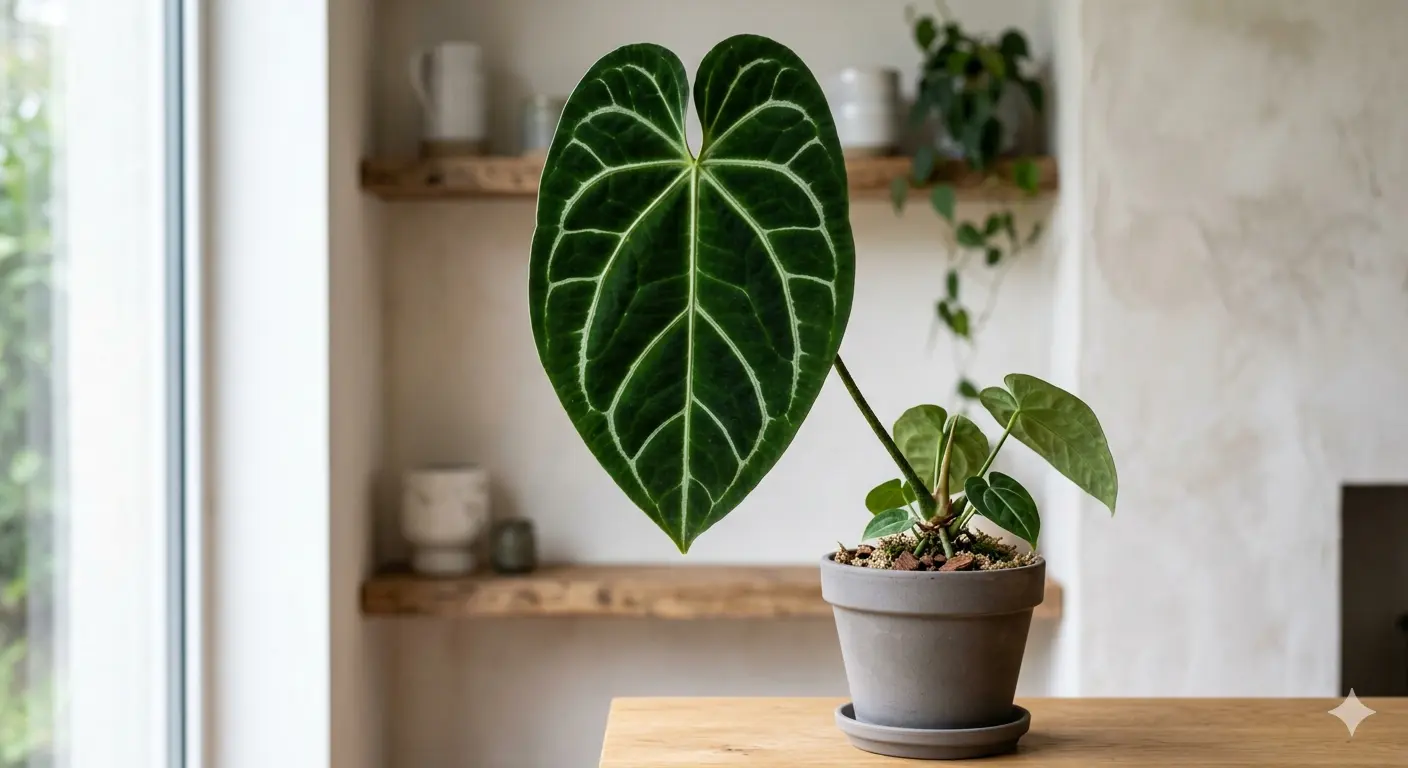
Anthurium regale is one of the most majestic plants you can grow indoors, and it earns the name. Its huge, heart-shaped, velvety leaves are deep green with striking pale, silvery veins, and on a mature plant they can reach truly dramatic sizes.
It is a collector’s plant, native to the cloud forests of Peru, and a touch demanding, but its sheer presence is unmatched. This guide covers everything you need to grow a healthy regale, from light and water to the velvet-leaf quirks that set it apart.
Quick care summary
Anthurium regale wants bright indirect light (never direct sun), warmth of 60 to 85°F, and high humidity of 60 to 80 percent. Water when the top inch or two of soil dries, in a chunky aroid mix, and never let it sit soggy. Raise humidity through the air, not by misting the velvet leaves.
This is a variety guide. For the full picture across the genus, see my Anthurium care guide and my roundup of the best Anthurium varieties.
What is Anthurium regale?
Anthurium regale is a prized collectible aroid native to northeastern Peru, where it grows along the edge of the Andes at moderate elevations. It belongs to the velvet-leaved group of anthuriums, grown purely for spectacular foliage.
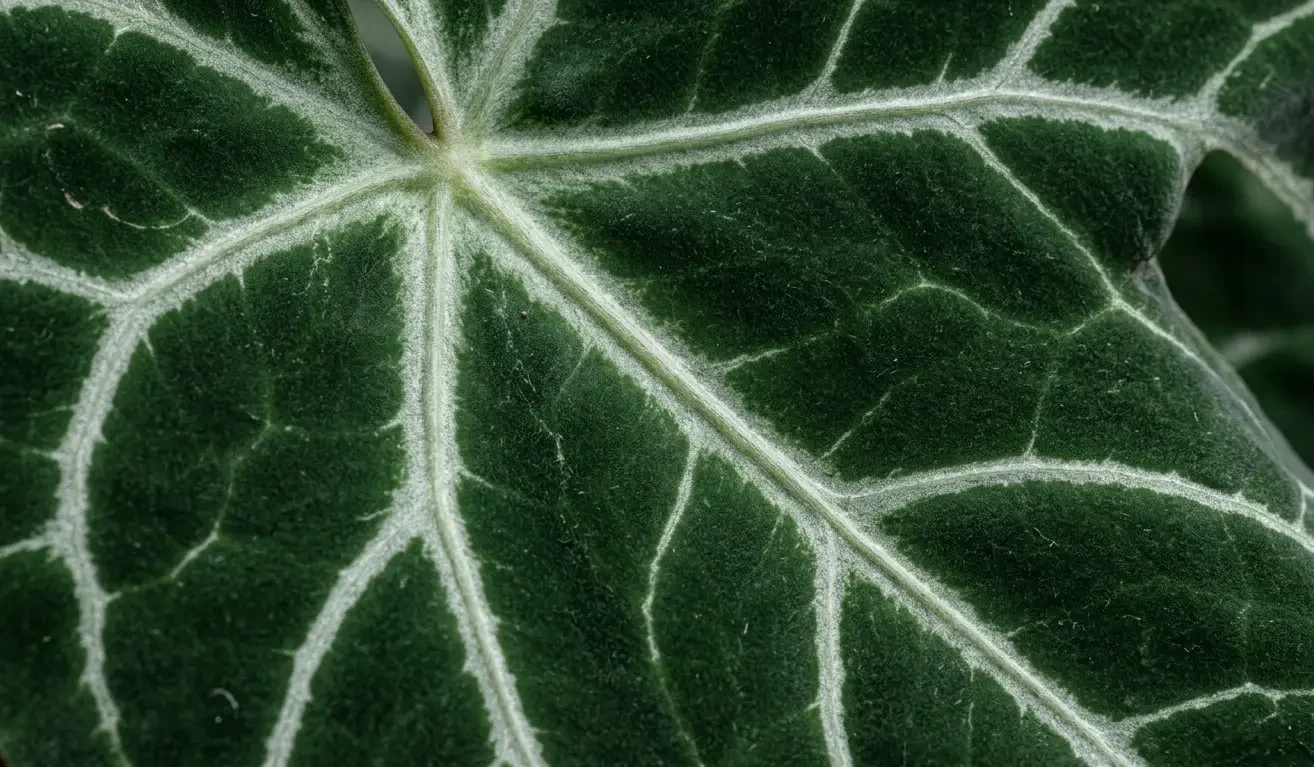
Its signature is the leaf: large, heart-shaped, and velvety, in deep green, traced with pale, silvery-white veins that stand out beautifully against the dark blade. The leaves sit on long petioles and can grow enormous.
On mature specimens, leaves reach several feet long, and exceptional plants approach six feet. Indoors they usually stay smaller, but even a modest regale is a showstopper.
Anthurium regale quick-care table
| Need | What it wants |
|---|---|
| Light | Bright, indirect; no direct sun |
| Water | When top 1 to 2 inches dry; never soggy |
| Humidity | High, 60 to 80 percent |
| Temperature | Warm, 60 to 85°F (15 to 29°C) |
| Soil | Chunky, airy aroid mix |
| Size | Large; leaves can reach several feet |
| Toxicity | Toxic to pets and people |
Light
Anthurium regale wants bright, indirect light, like the filtered light of its cloud-forest home. Good light keeps the leaves large and the veins vibrant, and supports its slow, steady growth.
Keep it out of direct sun. The velvet leaves scorch and fade in harsh direct light, losing the deep color and contrast that make them special. A spot near a bright window with filtered light, or just back from one, is ideal.
In too little light, growth slows, new leaves come in smaller, and the plant can get leggy, so err toward bright but gentle light.
Watering
Water when the top inch or two of soil is dry. The aim is evenly moist soil that is never waterlogged, so check before each watering rather than watering on a fixed schedule.
Overwatering is the main danger. Regale is prone to root rot if kept soggy, so let that top layer dry, use a pot with drainage, and never let it stand in water. When unsure, wait a day.
That said, do not let it dry out hard either, especially with its large leaves to support. Steady, light moisture keeps it happiest, wet roots and bone-dry soil are both stressful.

Soil
Like other velvet anthuriums, regale needs a chunky, airy, fast-draining mix, never dense potting soil. Its roots need oxygen, and good drainage is the single best defense against root rot.
A standard aroid mix works well: orchid bark and perlite for structure, with some coco coir or sphagnum moss to hold a little moisture, and optionally a bit of charcoal. The mix should hold light moisture but let excess water drain straight through.
Always use a pot with drainage holes. Many regale growers also have success in semi-hydroponic setups, but a good chunky aroid mix in a draining pot is the simplest reliable choice.
Humidity
Humidity is critical for regale. It wants high humidity, ideally 60 to 80 percent, reflecting its humid forest origins. In dry air, the leaf edges brown and the plant sulks.
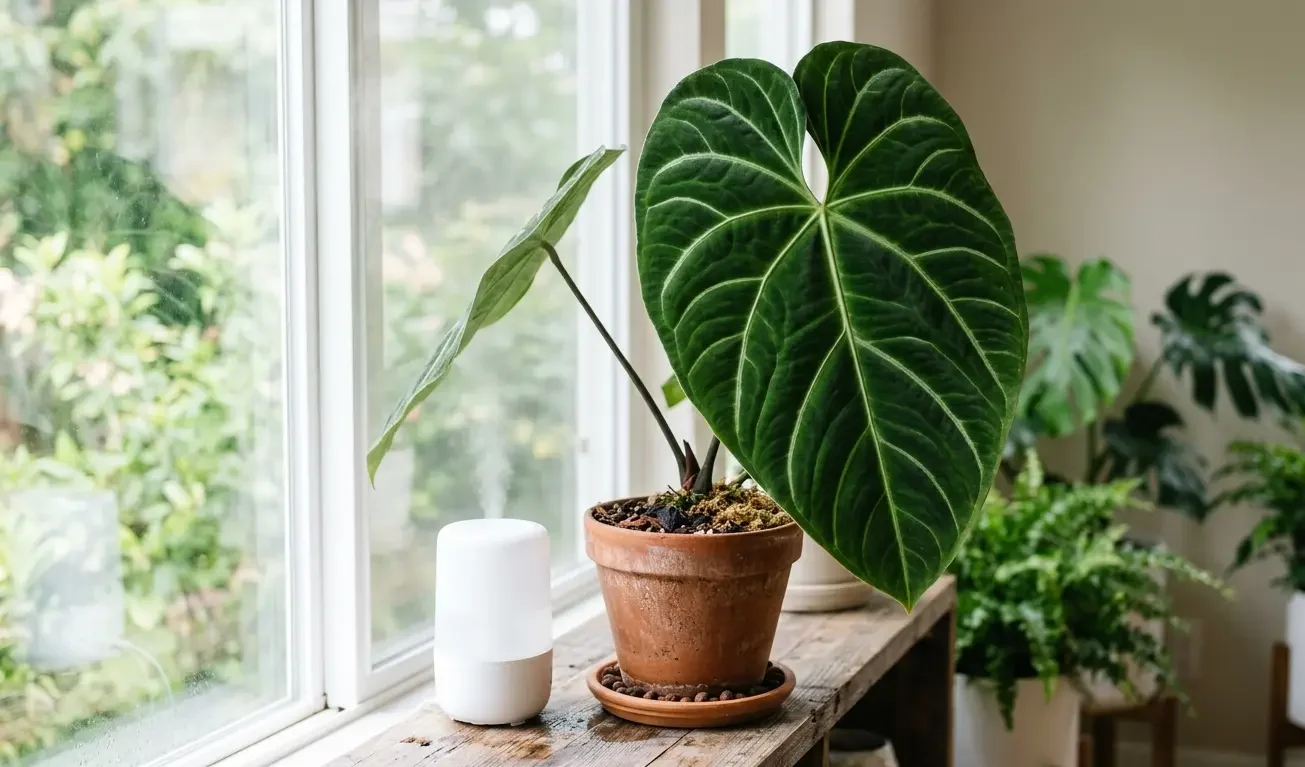
Raise humidity with a humidifier, a pebble tray, or by grouping it with other plants, and a grow cabinet or terrarium suits it well. Crucially, pair humidity with good airflow, stagnant humid air invites disease.
Here is the important caution: do not raise humidity by misting the leaves. Regale’s velvet leaves are prone to bacterial spotting and can deteriorate fast when water sits on them, so humidify the air around the plant rather than wetting the foliage.
Temperature and feeding
Keep regale warm, ideally 60 to 85°F (15 to 29°C), and away from cold drafts, AC vents, and heating vents, all of which stress it. It is not frost-hardy, so keep it indoors in any cool climate.
Feed lightly during the growing season. A diluted balanced fertilizer, or one slightly higher in phosphorus, at quarter to three-quarter strength every few weeks to every few months is plenty. Go easy, as too much fertilizer burns the sensitive roots.
New leaves and the one-leaf quirk
Two things about regale’s growth are worth knowing, and both are normal.
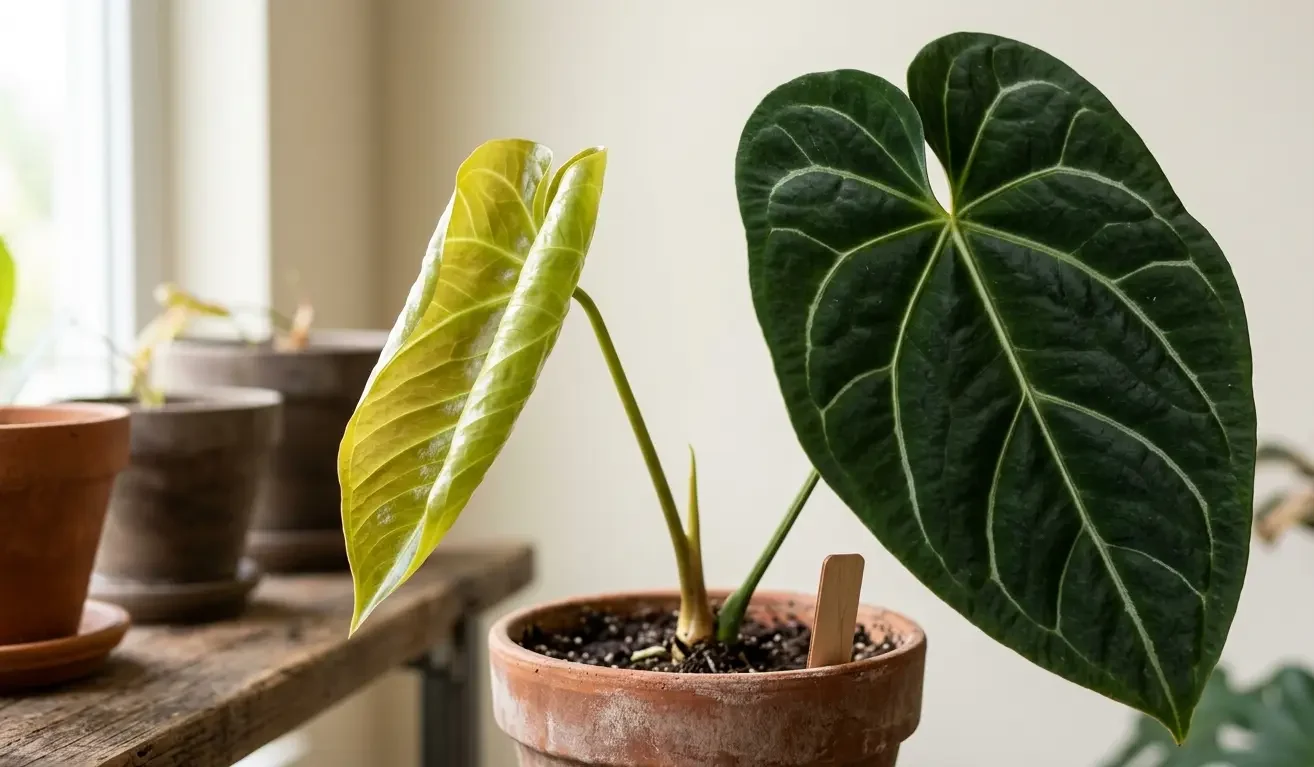
First, new leaves emerge a lovely golden-green before maturing to deep velvet green. Second, and this surprises people, regale often struggles to keep more than one leaf at a time indoors, dropping an older leaf as a new one hardens off.
So if your regale is down to a single leaf, do not panic, that is common for this species in cultivation. As long as healthy new growth keeps coming, a one-leaf regale is doing fine, not failing.
Common problems
Most regale issues come down to watering, humidity, airflow, or light.
Brown, crispy leaf edges usually mean low humidity. Yellowing leaves often signal overwatering and root rot, so check the roots and ease off water.
Brown or black spots on the velvet surface point to bacterial infection or leaf spot, frequently from water sitting on the leaves, so humidify the air, improve airflow, and remove badly affected leaves.
Like other anthuriums, regale can also attract spider mites, mealybugs, and scale, so check the leaves, especially undersides, and treat early with insecticidal soap or neem oil.
Anthurium regale vs magnificum
These two big velvet anthuriums are often confused, and the quickest way to tell them apart is the new leaves.
Regale’s new leaves emerge golden-green, while magnificum’s emerge dark red or brown. Both mature into large, dark, velvety, pale-veined leaves, but that emerging color is the reliable tell. Regale also tends toward longer, more elongated leaves over time.
Is Anthurium regale worth it?
If you love dramatic velvet foliage and can provide steady humidity and care, regale is a magnificent plant, a genuine centerpiece and a prize of any collection. It is more demanding than a beginner aroid, but not difficult once you understand its needs.
Just remember it is toxic to pets and people if chewed, like all anthuriums, so place it out of reach.
Do you grow Anthurium regale, or are you hoping to add one? Tell me about your setup in the comments, and see my Anthurium care guide for the genus-wide basics.
Frequently asked questions
Is Anthurium regale hard to care for?
It is a moderately demanding collector’s plant, not a beginner aroid. The care itself is straightforward, bright indirect light, warmth, high humidity, and careful watering, but it is sensitive to dry air, soggy soil, and change, and its velvet leaves bruise and spot easily. Rewarding for an attentive grower.
How big do Anthurium regale leaves get?
Very big. Mature plants can produce velvety heart-shaped leaves several feet long, and exceptional specimens reach close to six feet. Indoors they usually stay smaller, but even then the leaves are dramatic and become a real centerpiece.
What is the difference between Anthurium regale and magnificum?
The easiest tell is the new leaves. Regale’s new leaves emerge golden-green, while magnificum’s emerge dark red or brown. Both are large velvet anthuriums with pale veins, but that emerging-leaf color is the quickest way to tell them apart.
Why does my Anthurium regale only have one leaf?
This is a known regale quirk. Grown indoors, it often struggles to hold more than one leaf at a time, dropping an older leaf as a new one matures. A single-leaf regale is common and not necessarily a sign of a problem, as long as new growth keeps coming.
Why are my Anthurium regale leaves getting brown spots?
Often bacterial infection or leaf spot, to which the velvet leaves are prone, usually from water sitting on the foliage or poor airflow. Raise humidity through the air rather than misting the leaves, improve airflow, and remove badly affected leaves.
Is Anthurium regale toxic to pets?
Yes. Like all anthuriums, it contains calcium oxalate crystals and is toxic to cats, dogs, and people if chewed. Keep it out of reach of pets and children.
