

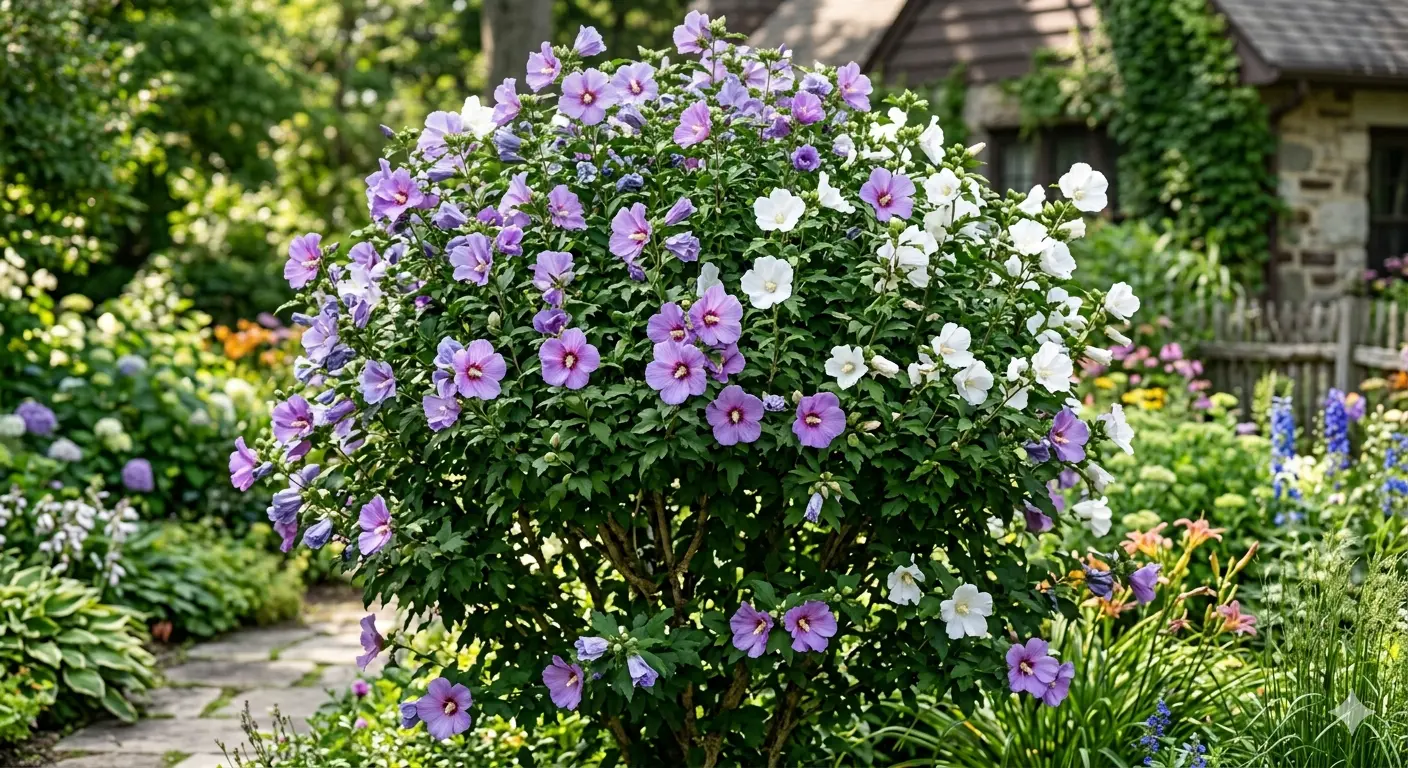
When most people search for Rose of Sharon plants for sale, they are looking for one specific thing: a Hibiscus syriacus shrub to plant in their yard. It is one of the most popular summer-flowering shrubs in temperate North American gardens, and finding the right cultivar at the right price is the actual goal.
There is also a wholesale business called Rose of Sharon Nursery Inc in Miami, which is a separate matter. This article covers both honestly: where to actually buy Rose of Sharon shrubs as a home gardener, and what Rose of Sharon Nursery Inc is for readers looking specifically for it.
Quick answer
Rose of Sharon is the common name for Hibiscus syriacus, a flowering shrub hardy in USDA zones 5 through 9. Most home gardeners can buy it at local independent garden centers, big-box retailers, or online specialty nurseries during the spring planting season. Rose of Sharon Nursery Inc in Miami is a separate wholesale business that does not sell directly to the public.
What Rose of Sharon actually is
A short orientation, because this matters before buying.
The plant. Rose of Sharon (Hibiscus syriacus) is a deciduous flowering shrub native to East Asia. It grows 8 to 12 feet tall and 6 to 10 feet wide depending on cultivar. The flowers are large, open, and trumpet-shaped, blooming from mid-summer through early fall when many other flowering shrubs are done for the season.
Hardiness. Rose of Sharon is hardy in USDA zones 5 through 9, which covers most of the lower 48 states. It thrives in temperate climates that have a real winter, which is why it is so common in the Mid-Atlantic, Midwest, and parts of the South.
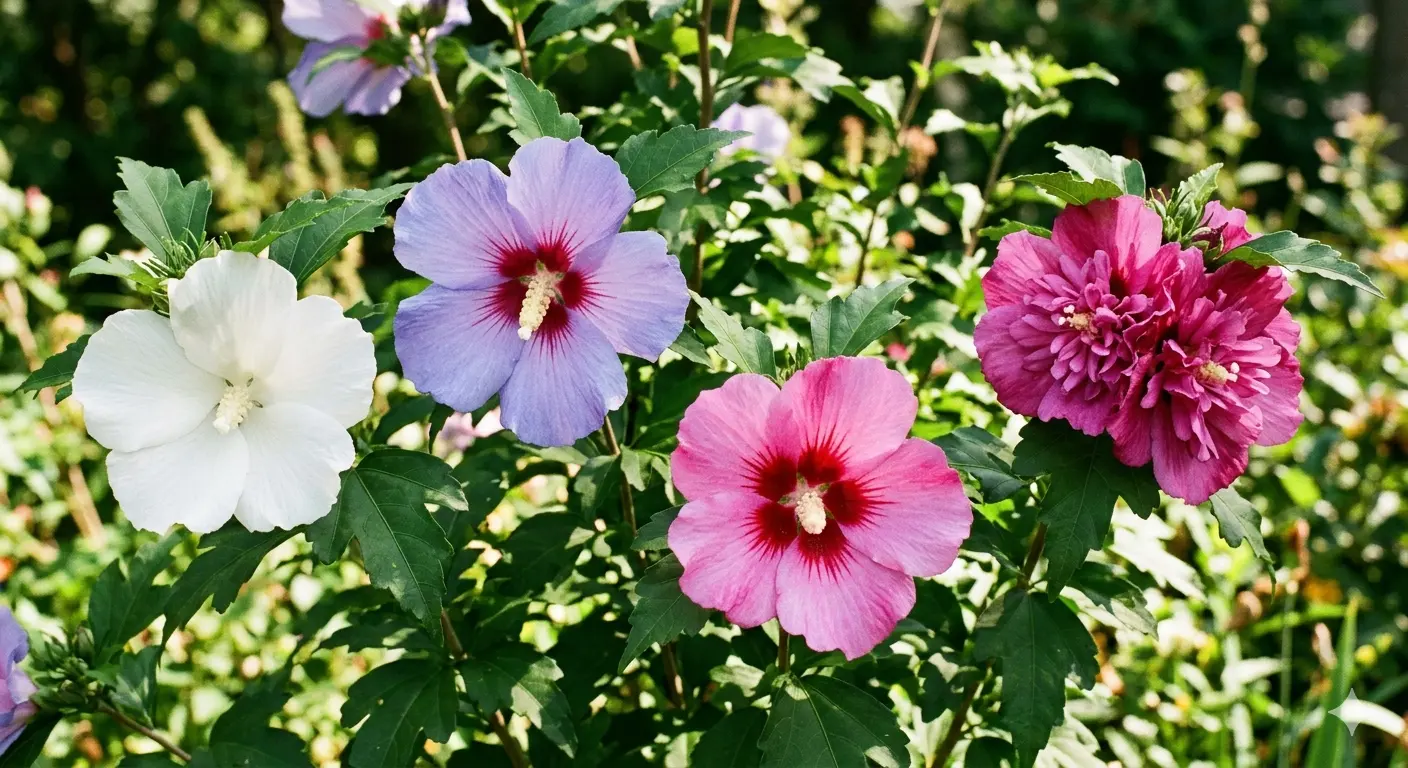
Flower colors. Modern cultivars come in white, blue-violet, pink, purple, and bicolor combinations. Some are double-flowered, others single. The petal patterns at the flower center (often called the eye) are an important part of how you tell cultivars apart.
Uses in the landscape. Rose of Sharon works as a hedge plant, a screen, a specimen shrub, or a foundation planting. The summer-to-fall bloom window is its strongest selling point because it fills a gap when most flowering shrubs are done.
Where to actually buy Rose of Sharon plants
For home gardeners, there are four practical sources.
Local independent garden centers. This is the best first stop in most cases. Rose of Sharon is widely stocked across the eastern and central United States from spring through early summer. Independent nurseries often carry specific named cultivars that big-box stores do not, and the staff can help you pick a variety that fits your climate and goals.
Big-box retailers. Lowe’s and Home Depot carry Rose of Sharon during the spring season, typically in 2 to 5-gallon containers. The selection is usually limited to common cultivars, and the plants are often smaller than what an independent nursery offers. Pricing is the main advantage.
Online specialty nurseries. Several online nurseries ship Rose of Sharon nationally during the planting window. This is the right route for rare or hard-to-find cultivars, including grafted forms and newer sterile varieties. Expect the plants to arrive smaller, since shipping cost scales with container size.
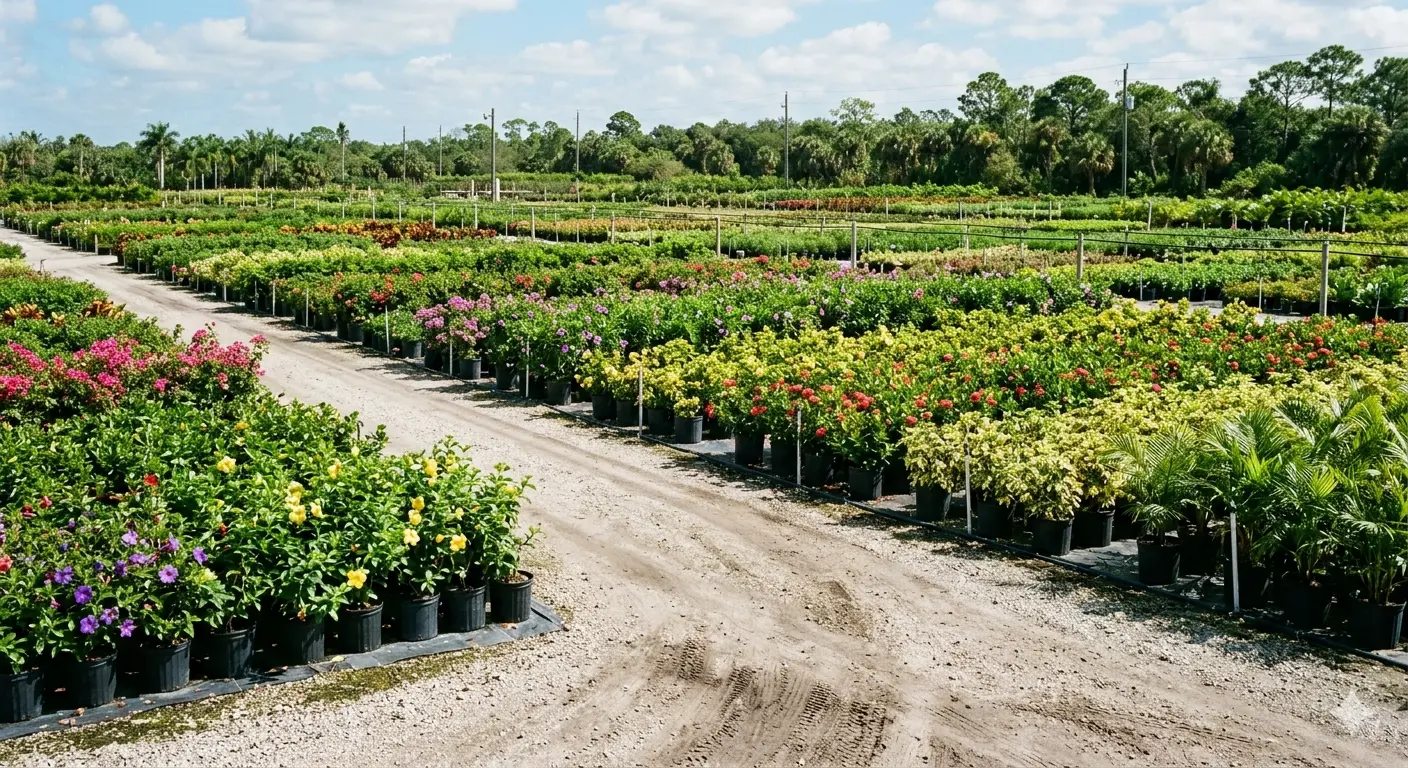
Wholesale through a landscape contractor. For larger landscape projects involving multiple shrubs, going through a landscape contractor who has wholesale access can be cost-effective. Contractors source from operations like Rose of Sharon Nursery Inc and similar regional wholesale growers.
What about Rose of Sharon Nursery Inc?
For readers specifically looking for the Miami-area wholesale business, here is what is known.
Location. Rose of Sharon Nursery Inc is at 18805 SW 208th Street, Miami, FL 33187. The address sits in the agricultural southwest of Miami-Dade County, an area dense with wholesale nurseries.
Hours. Monday through Friday 8:30 AM to 5 PM, closed Saturday and Sunday. The weekday-only schedule is typical of wholesale operations.
Operational model. Reviewers describe it as not the kind of place you can wander around. Customers are encouraged to call orders in rather than browse. This is a wholesale-to-trade business, not a retail garden center.
Rating. 3.6 stars across 11 reviews. The sample is small, and reviews are mixed. Positive reviewers describe the products as great and the staff as easy to work with if you plan ahead. Negative reviewers describe loading and staff issues. With only 11 reviews, neither pattern is definitive.
Who it actually serves. Landscape contractors, retail nurseries, and re-wholesalers. The variety mentioned in positive reviews includes general nursery stock, not specifically Rose of Sharon. The business name does not necessarily reflect what they specialize in.
If you are a home gardener looking to buy a Rose of Sharon shrub, this is almost certainly not the right destination. If you are a trade buyer in the Miami area, calling (305) 232-6814 to discuss your needs is the right starting point.
Picking the right Rose of Sharon cultivar
When you are at a garden center, the cultivar choice matters more than most shoppers realize.
For sterile cultivars (no self-seeding). Look for Blue Chiffon, Blue Satin, Lil’ Kim, or other newer cultivars specifically bred for sterility. Older varieties can self-seed aggressively, which becomes a maintenance issue and is invasive in some regions.
For pure white flowers. Diana is one of the most popular white Rose of Sharon cultivars, with large clean white flowers and minimal seeding.
For blue-violet flowers. Blue Chiffon (double-flowered) and Blue Satin (single-flowered) are both sterile and produce striking blue-violet blooms. These are the cultivars to ask for if you want the distinctive Rose of Sharon blue.
For pink with red eye. Aphrodite is a classic pink cultivar with a contrasting red center. Reliable bloomer, attractive to pollinators.
For double flowers. The Chiffon series (Blue Chiffon, Pink Chiffon, White Chiffon, Lavender Chiffon) all produce double flowers and are sterile.
For dwarf or compact size. Lil’ Kim and Sugar Tip are smaller-growing cultivars for tight spaces.
What to look for when buying
A few practical buying tips.
Healthy foliage. Avoid plants with yellowing leaves, leaf spots, or signs of pest damage. The leaves should be a deep green with no dead patches.
Strong stem structure. Look for a plant with multiple healthy stems rather than a single weak central trunk. Rose of Sharon is naturally multi-stemmed and benefits from that shape.
Container size and roots. Larger containers (3 to 5 gallon) give you a more established plant, but a healthy 2-gallon will catch up quickly. Avoid plants where roots are circling tightly inside the pot, which signals it has been in the container too long.
Cultivar tag. Always confirm the cultivar name. “Rose of Sharon” alone is not enough information. The tag should specify Diana, Blue Chiffon, Aphrodite, or whichever cultivar you are buying.
Bloom proof. If the plant is in bloom or has buds, you can verify the cultivar matches what you think you are buying. If buying in early spring before bloom, trust the tag and the nursery’s labeling system.
Planting and early care basics
Once you have bought your Rose of Sharon, a few first-season considerations matter.
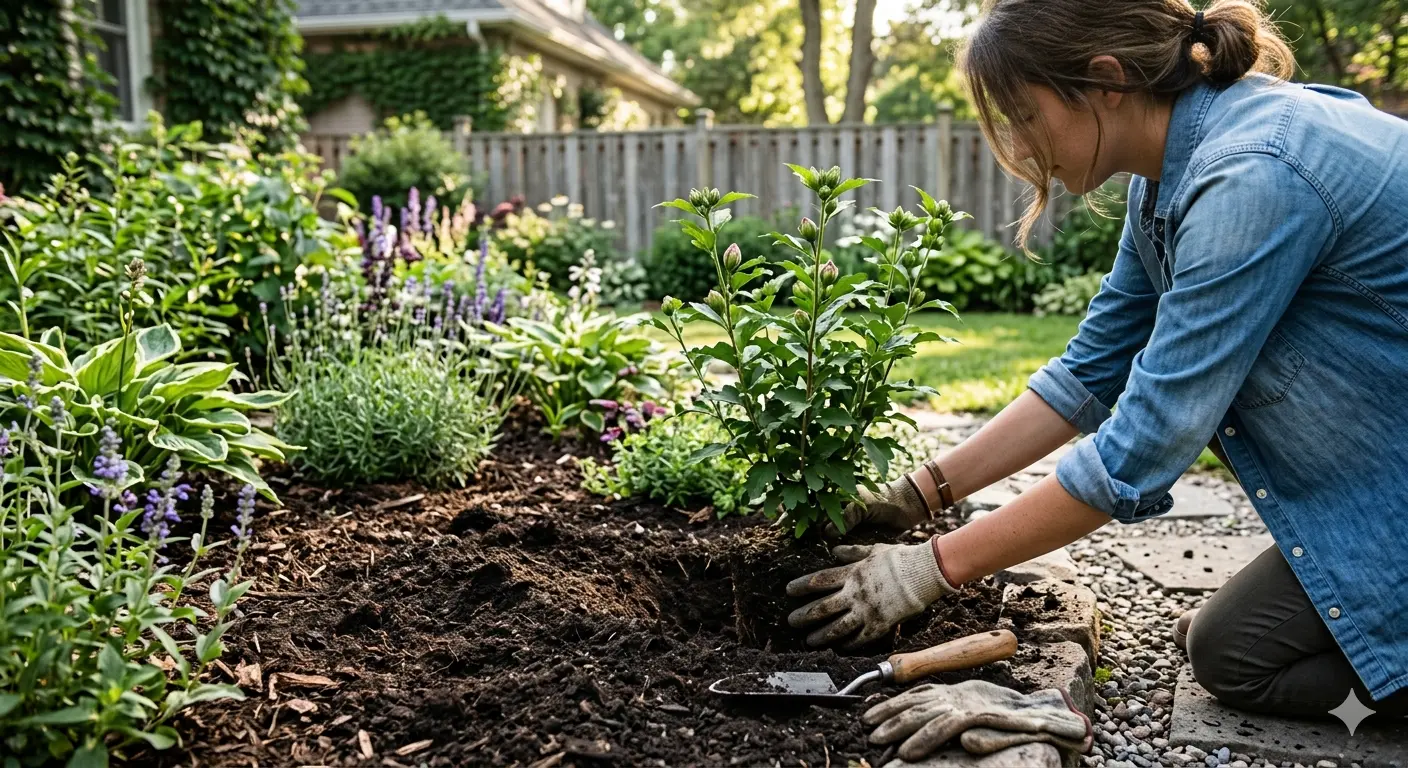
Plant timing. Spring, after the last frost in your area, is the best window. Early fall (at least six weeks before first frost) is the second-best option. Avoid summer planting in hot zones unless you are committed to daily watering.
Site selection. Full sun is non-negotiable for good bloom. Six hours of direct sun minimum. Partial shade will reduce flowering significantly.
Soil. Well-drained soil is the most important requirement. Rose of Sharon tolerates a range of soil types but hates wet feet. If your soil is heavy clay, amend the planting hole with compost.
Spacing. Allow 6 to 10 feet between plants for a screen or hedge, depending on the cultivar’s mature size. Read the tag for specifics.
First-season watering. Water deeply once or twice a week through the first growing season, more often in extreme heat. After the first year, Rose of Sharon is reasonably drought-tolerant.
First-year pruning. Minimal. Let the plant establish through the first year, then prune in late winter or early spring before new growth begins in subsequent years.
A note on invasiveness
In some regions, older Rose of Sharon cultivars are considered invasive because they self-seed aggressively. The seedlings can crowd out native plants.
The solution is to buy sterile cultivars. The Chiffon series, Diana, and several newer introductions are specifically bred to produce no viable seeds. If invasiveness is a concern in your region, ask the nursery for sterile-cultivar options before buying. Most independent garden centers will know which cultivars are sterile.
Confirm before driving
For home gardeners, Rose of Sharon plants are widely available at local garden centers from spring through early summer. Rose of Sharon Nursery Inc in Miami is a wholesale operation closed to walk-in retail. For consumer buying, your local garden center or a reputable online specialty nursery is the right route.
Final thoughts
Rose of Sharon is one of the easier ornamental shrubs to find and plant in temperate North American gardens. The key decisions are which cultivar to choose (sterile versus non-sterile, color, flower form, size) and where to buy.
For most people, the local independent garden center is the right route, with online specialty for rare cultivars. Rose of Sharon Nursery Inc in Miami is a separate wholesale business that does not solve the typical home-gardener buying question.
If you have planted Rose of Sharon and have favorite cultivars to recommend, tell me in the comments. Real reader experiences with specific cultivars are especially valuable for shoppers comparing options.
Frequently Asked Questions
What is Rose of Sharon?
Rose of Sharon is the common name for Hibiscus syriacus, a deciduous flowering shrub native to East Asia. It is hardy in USDA zones 5 through 9, blooms in summer through early fall, and produces white, blue, pink, purple, and bicolor flowers. It is widely used as a hedge, screen, or specimen.
Where can I buy Rose of Sharon plants?
Most local independent garden centers in zones 5 through 9 stock Rose of Sharon during the spring and early summer planting season. Big-box retailers like Lowe’s and Home Depot carry common cultivars. Online specialty nurseries ship rare cultivars. For larger landscape orders, going through a landscape contractor is the right route.
What is Rose of Sharon Nursery Inc?
Rose of Sharon Nursery Inc is a wholesale nursery at 18805 SW 208th Street, Miami, FL 33187. They sell to landscapers and retail nurseries rather than to the general public. They are closed weekends and prefer that orders be called in rather than walk-ins. Most home gardeners cannot buy from them directly.
What are good Rose of Sharon cultivars to look for?
Popular cultivars include ‘Diana’ (pure white), ‘Blue Chiffon’ and ‘Blue Satin’ (blue-violet, sterile so less self-seeding), ‘Aphrodite’ (pink with red eye), and the Chiffon series for double flowers. Sterile cultivars are worth seeking out if you want to avoid the seedling spread that older varieties can create.
When should I plant Rose of Sharon?
Plant in spring after the last frost, or in early fall at least six weeks before the first expected frost. Spring planting gives the longest establishment window. The shrub needs full sun (at least six hours), well-drained soil, and consistent watering through its first growing season.
Is Rose of Sharon invasive?
In some regions, older Rose of Sharon cultivars self-seed aggressively and can become weedy. Modern sterile cultivars (Blue Chiffon, Blue Satin, others in the Chiffon series) were bred specifically to eliminate this issue. If invasiveness is a concern in your area, ask the nursery for sterile cultivar options before buying.
