

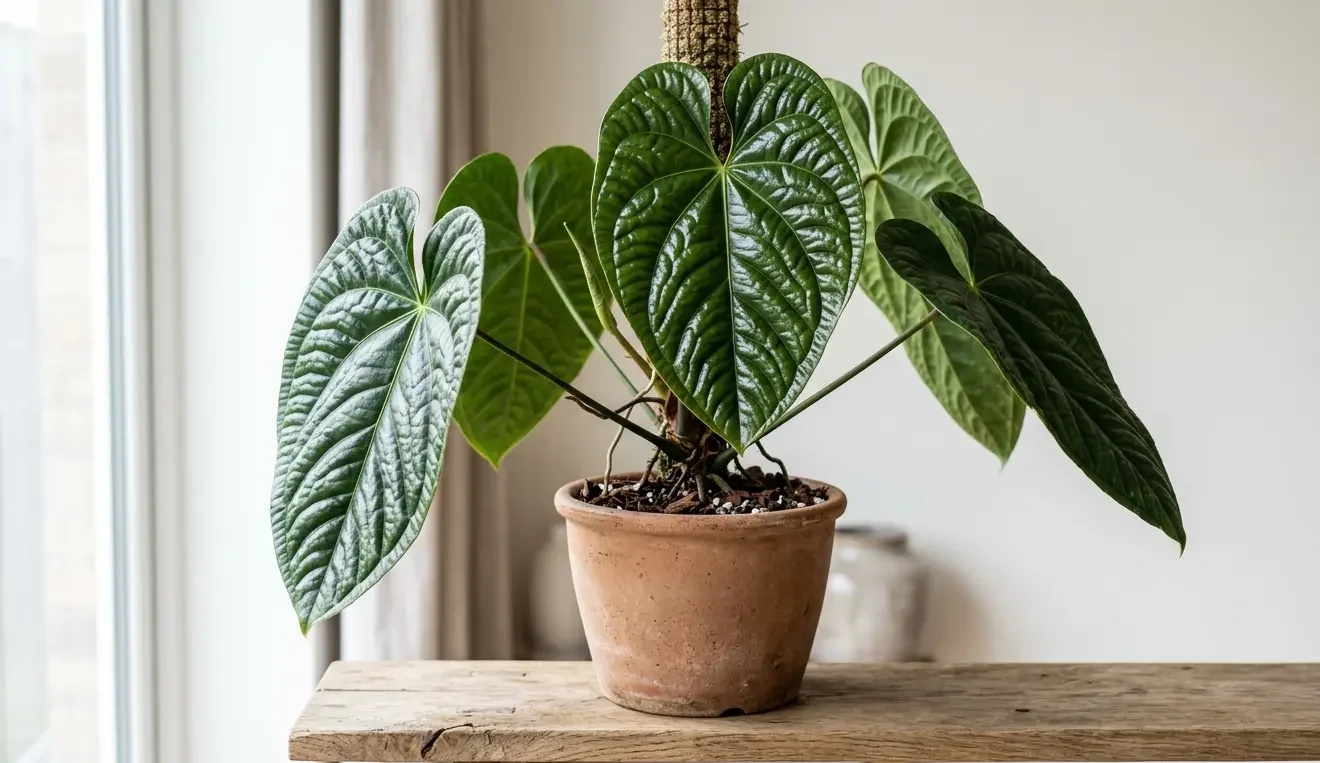
Anthurium luxurians is one of the most coveted aroids in the houseplant world, and for good reason. Its thick, leathery leaves are deeply bullate, quilted and blistered into a three-dimensional texture, with a high gloss and metallic sheen that catch the light like few other plants.
It is a rare Colombian collector’s plant, slow-growing and a little demanding about humidity, but not difficult once you understand what it wants. This guide covers everything you need to keep one thriving, from light and water to the bullate-leaf quirks that make it special.
Quick care summary
Anthurium luxurians wants bright indirect light (never direct sun), warmth of 65 to 90°F, and high humidity of 60 to 80 percent. Water when the top two inches of soil dry, in a chunky aroid mix, and underwater rather than over, since the thick roots rot easily. Raise humidity with a humidifier, not misting.
This is a variety guide. For the full picture across the genus, see my Anthurium care guide and my roundup of the best Anthurium varieties.
What is Anthurium luxurians?
Anthurium luxurians is a rare species native to the rainforests of Colombia, prized by collectors for its extraordinary foliage. Unlike many anthuriums, it grows terrestrially on shaded, rocky forest floors at lower elevations, where humidity stays consistently high.
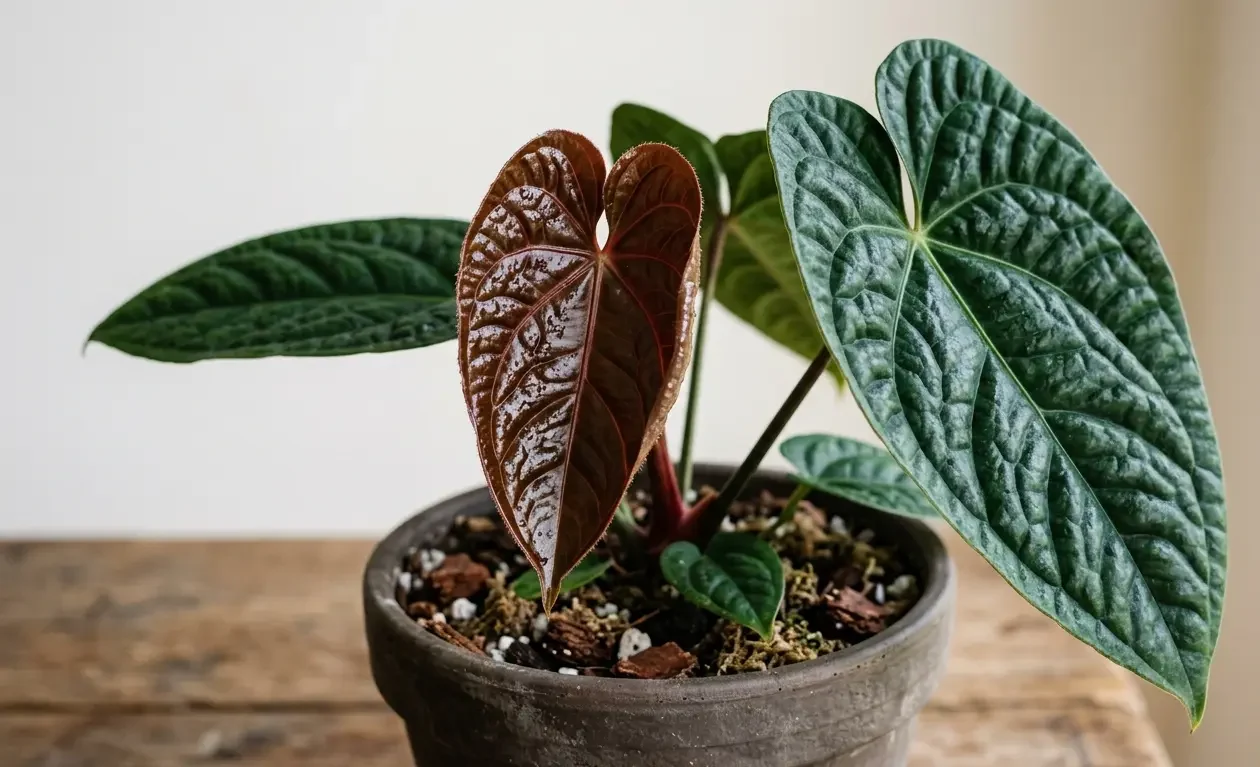
Its signature is the deeply bullate leaf texture: thick, leathery, glossy leaves quilted into raised, blistered ridges that reflect light beautifully. New leaves emerge a dramatic dark chocolate, bronze, or reddish color before maturing to a deep, iridescent green.
It is a slow grower, reaching around 20 inches, and was historically confused with the different species A. splendidum. A true benchmark plant in any serious aroid collection.

Anthurium luxurians quick-care table
| Need | What it wants |
|---|---|
| Light | Bright, indirect; no direct sun |
| Water | When top 2 inches dry; underwater rather than over |
| Humidity | High, 60 to 80 percent |
| Temperature | Warm, 65 to 90°F (18 to 32°C) |
| Soil | Chunky, airy aroid mix |
| Growth | Slow; a new leaf every 2 to 4 months |
| Toxicity | Toxic to pets and people |
Light
Anthurium luxurians wants bright, indirect light, ideally six to eight hours a day. Coming from shaded forest floors, it actually needs a little less intense light than some anthuriums.
Even so, it still wants good brightness to fuel its slow growth, just out of any direct sun.
Avoid direct sunlight. Despite the thick leaves, direct sun scorches and damages the surface, dulling that prized gloss. A spot near a bright window with filtered light, or a few feet back from it, is ideal.
Interestingly, the bullate texture is thought to be an adaptation to low light, the blistered surface increases the leaf area for capturing what light reaches the forest floor.
Watering
Water when the top two inches of soil are dry. In warm, bright months this may be every few days; in winter, when the plant slows or rests, far less often, sometimes only every week or two.
The key risk is overwatering. Luxurians has thick, juicy roots that rot easily if kept soggy, so let that top couple of inches dry first, and always err on the side of underwatering if you are unsure. Never let it stand in water.
That said, do not let it dry out completely either, especially when a new leaf is developing, as it needs steady moisture to grow that leaf to full size. Aim for lightly moist, never wet and never bone dry.
Soil
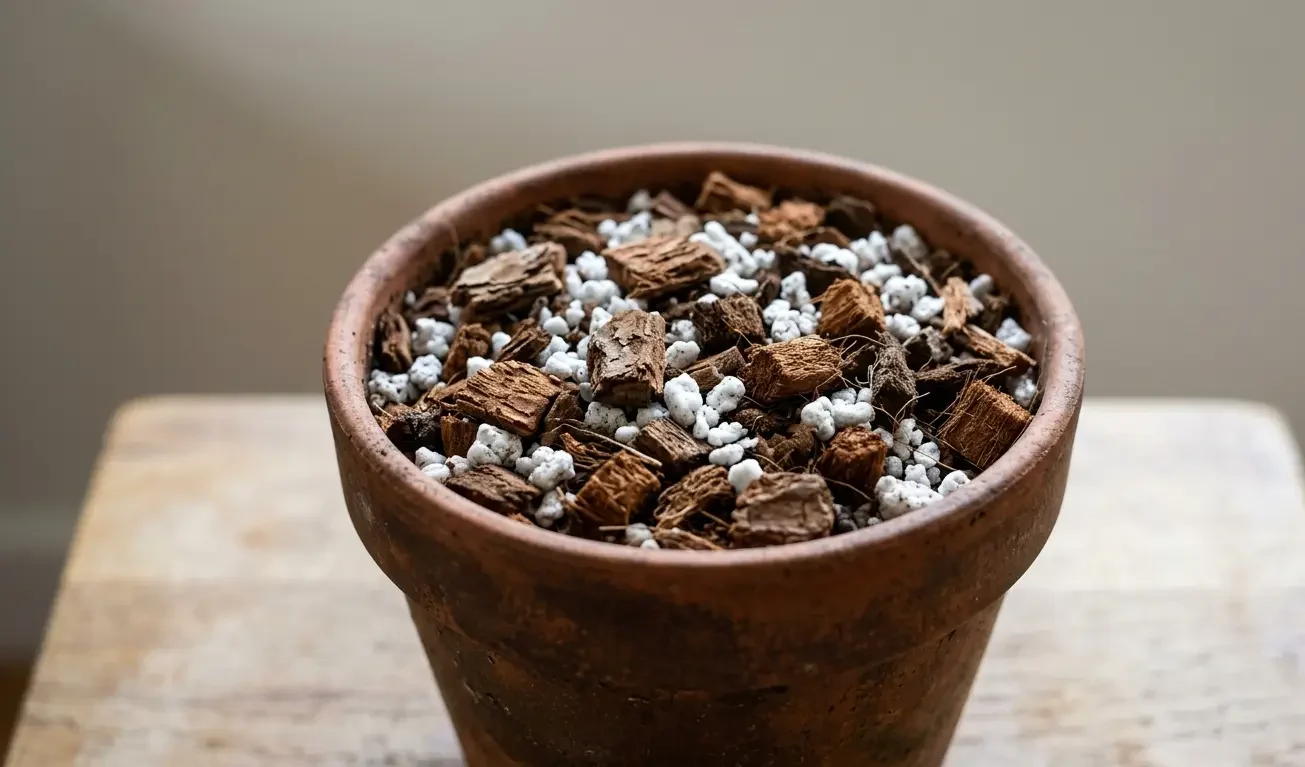
Like other aroids, luxurians needs a chunky, airy, fast-draining mix, never dense, water-holding potting soil. The roots need air, and good drainage is the single best defense against the root rot this plant is prone to.
A standard aroid mix works well: orchid bark and perlite as the base, with some coco coir or sphagnum moss to hold a little moisture, and optionally a bit of horticultural charcoal. Always use a pot with drainage holes.
The goal is a mix that holds light moisture but lets excess water flow straight through, keeping those thick roots happy and oxygenated.
Humidity
This is the make-or-break factor. Anthurium luxurians wants high humidity, ideally 60 to 80 percent, reflecting its humid forest-floor origins. In dry air, the leaf tips brown and the leaves can curl.
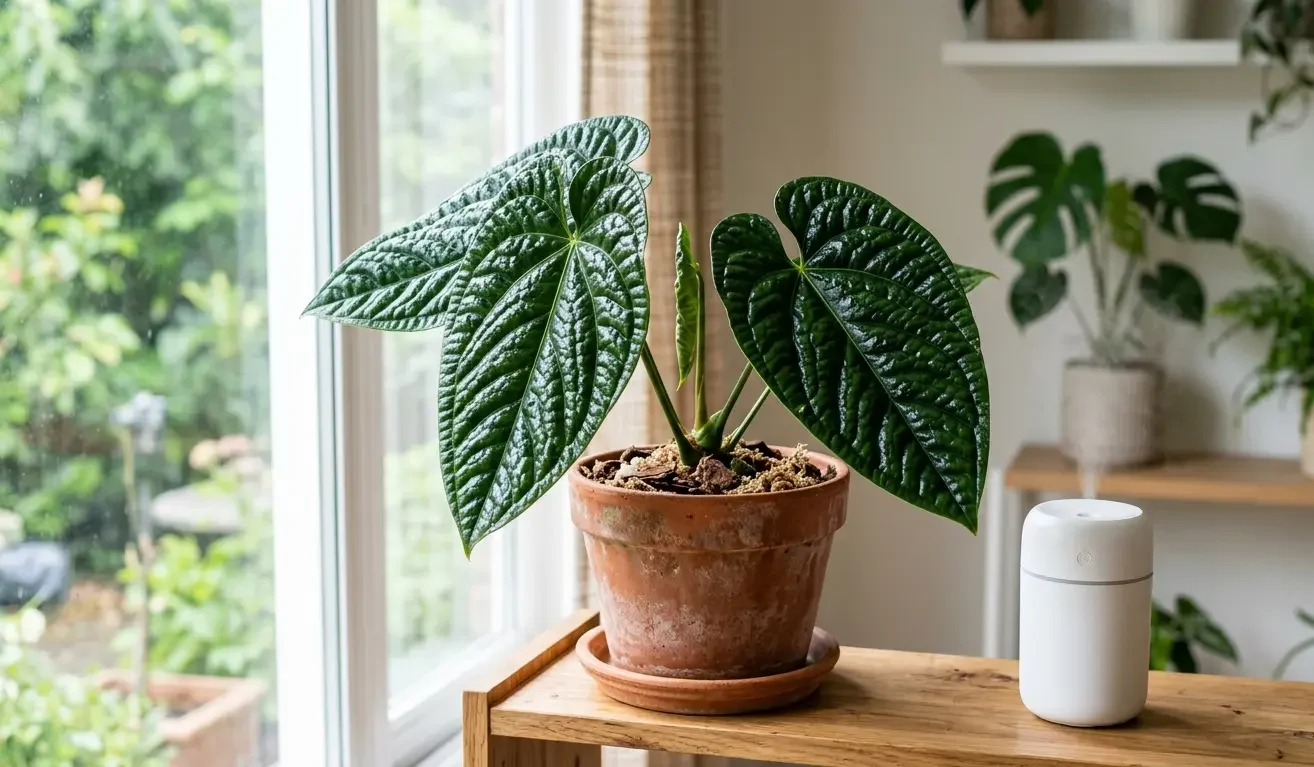
Raise humidity the right way, with a humidifier, a pebble tray, or by grouping it with other plants in a naturally humid room. A grow cabinet or terrarium suits it well. Good airflow alongside the humidity is important.
One honest caution: do not rely on misting the leaves. Water that lingers in the deeply textured, bullate surface can invite bacterial and fungal problems, so raise the ambient humidity of the air rather than wetting the foliage directly.
Temperature and feeding
Keep luxurians warm, ideally 65 to 90°F (18 to 32°C), and away from cold drafts, AC vents, and sudden temperature swings, to which it is sensitive. It is not frost-hardy and should stay indoors in any cool climate.
Feed lightly. A diluted balanced fertilizer at quarter strength every few weeks in the growing season, or a gentle slow-release feed a few times a year, is plenty. Its slow growth means it does not need heavy feeding, and too much fertilizer can burn the roots.
New leaves and slow growth
Do not be alarmed by how slowly luxurians grows. A new leaf every two to four months is completely normal for this species, so patience is part of the deal.
The reward is watching each new leaf unfurl. New growth emerges in striking dark chocolate, bronze, or reddish tones, then gradually hardens and matures into the deep, glossy, iridescent green the plant is famous for, with the bullate texture deepening as the leaf ages.
Common problems
A few issues come up with luxurians, almost all tied to humidity or watering.
Brown, crispy leaf tips or curling leaves usually mean the humidity is too low, raise it with a humidifier. Yellowing leaves typically point to overwatering and the start of root rot, so check the roots and let the soil dry more between waterings.
If you see fungal spots or rot on the leaf surface, it is often from water sitting on the textured leaves, another reason to humidify the air rather than mist. As a humid-loving plant, it can also attract pests, so check occasionally for the usual suspects.
Anthurium luxurians vs radicans
These two textured anthuriums are often confused, so here is the quick tell. Both have that desirable quilted, bullate look, but the leaf shape and color differ.
Radicans tends to have more pointed, somewhat lighter leaves, while luxurians has more oval, wider, darker leaves with a deeper gloss. If the leaf looks broad, dark, and intensely glossy, you are likely looking at luxurians.
Is Anthurium luxurians worth it?
If you love dramatic foliage and do not mind providing humidity, absolutely. It is slower and a touch fussier than a beginner aroid, but the deeply textured, metallic leaves are genuinely unlike anything else, and it is a centerpiece of any collection.
Just remember it is toxic to pets and people if chewed, like all anthuriums, so place it out of reach.
Do you have an Anthurium luxurians, or are you thinking of getting one? Tell me about your setup in the comments, and check out my Anthurium care guide for the genus-wide basics.
Frequently asked questions
Is Anthurium luxurians hard to care for?
It is moderately demanding, mostly because it needs consistently high humidity and warmth. The watering and light are straightforward, but its slow growth and humidity needs make it a collector’s plant rather than a true beginner aroid. Get the humidity right and it is rewarding.
Why are my Anthurium luxurians leaves getting brown tips?
Usually low humidity. Luxurians wants 60 to 80 percent humidity, and dry air causes browning tips and curling leaves. Raise ambient humidity with a humidifier and good airflow rather than misting the leaves, since water sitting on the textured surface can invite fungal problems.
How often should I water Anthurium luxurians?
Water when the top two inches of soil are dry, roughly every few days in warm months and much less in winter. The thick roots are prone to rot, so when in doubt, underwater rather than overwater. Never let it sit soggy.
What is the difference between Anthurium luxurians and radicans?
They look similar and are often confused. Radicans has more pointed, lighter leaves, while luxurians has more oval, wider, darker leaves with a glossier, deeply quilted texture. Luxurians was also once confused with the different plant A. splendidum.
Why does my Anthurium luxurians grow so slowly?
That is normal. Luxurians is a naturally slow grower, often taking two to four months to push out a single new leaf. As long as the new growth is healthy, slow is expected, not a sign of a problem.
Is Anthurium luxurians toxic to pets?
Yes. Like other anthuriums and aroids, it contains calcium oxalate crystals and is toxic to cats, dogs, and people if chewed. Keep it out of reach of pets and children.
