

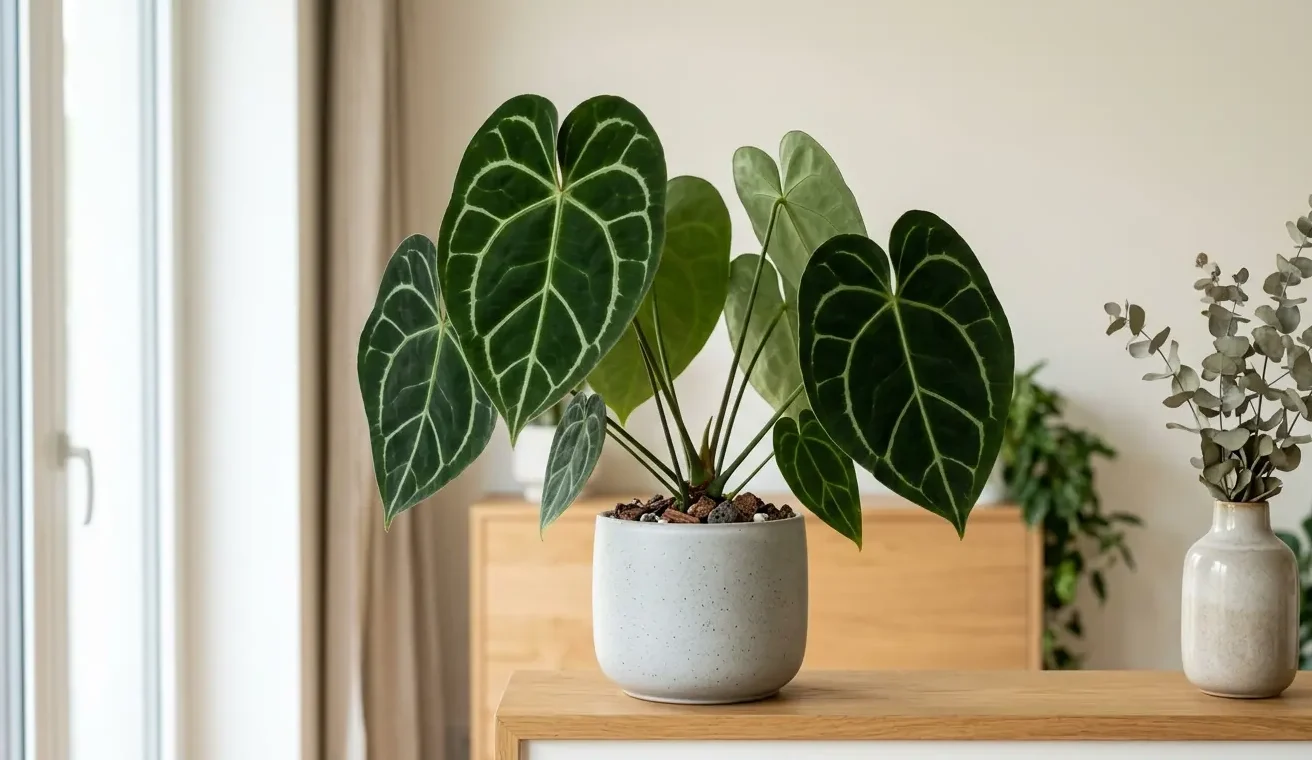
The Anthurium clarinervium, better known as the velvet cardboard anthurium, is one of the most striking foliage plants you can grow. Its thick, dark, velvety heart-shaped leaves are laced with bold creamy-white veins, so each leaf looks almost hand-painted.
It has a reputation as a fussy collector plant, but that reputation is mostly about one thing: humidity. Get that right, and clarinervium care is genuinely straightforward, which is why it is the velvet-leaf anthurium I recommend starting with.
Short answer
Give an Anthurium clarinervium bright indirect light, a chunky airy mix, and water when the top inch of soil dries, never soggy. The one thing that makes or breaks it is humidity: aim for 60 percent or higher. Brown crispy leaf edges almost always mean the air is too dry.
This guide covers light, watering, soil, the all-important humidity, feeding, propagation, and the common problems, in short sections you can scan. Clarinervium follows the same core rules as the rest of the genus, so if you want the wider picture my Anthurium care guide covers the basics that apply here too.
What is an Anthurium clarinervium?
Clarinervium is a foliage anthurium native to the rainforests of Chiapas, in southern Mexico. In the wild it grows as an epiphyte, clinging to trees and rocks rather than rooting in the ground.
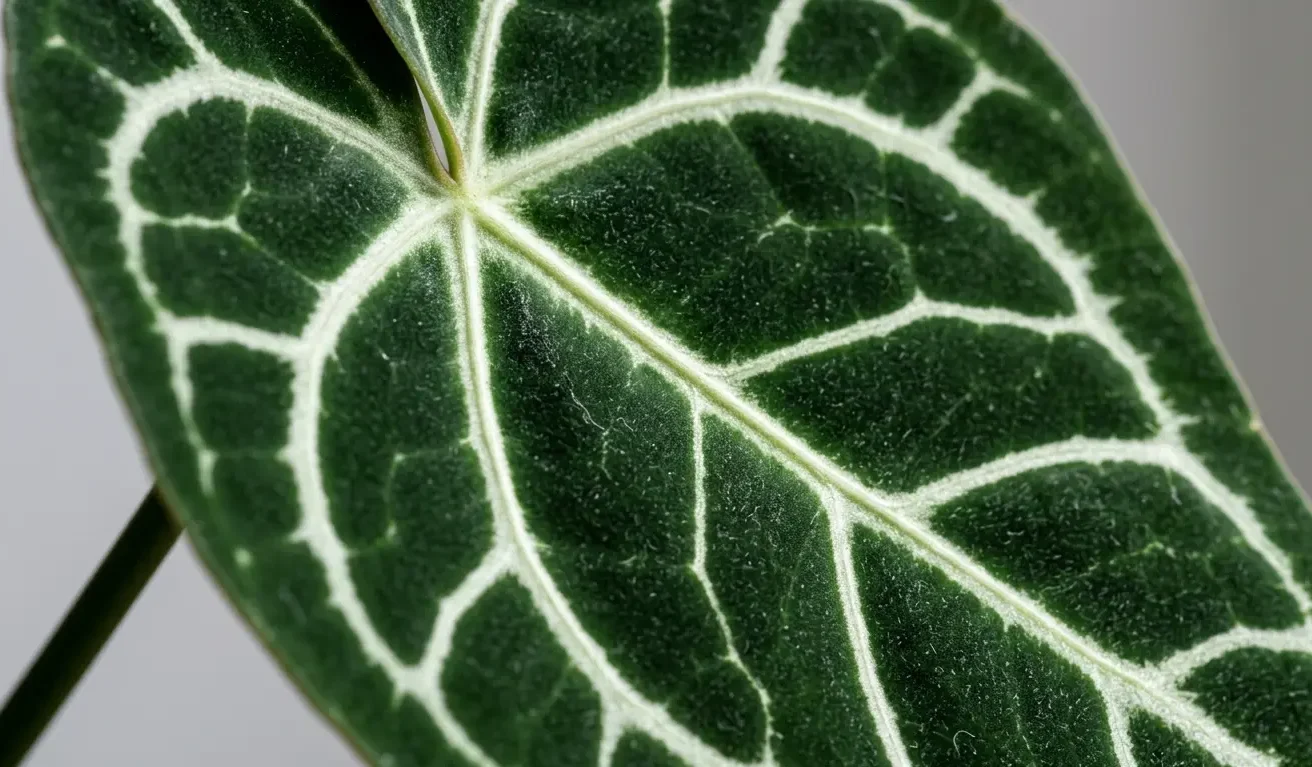
Its signature is the leaf: thick, stiff, and leathery, with a velvety dark-green surface and bold ivory-white veins. That sturdy, almost cardboard-like texture is where the common name velvet cardboard anthurium comes from.
The leaves grow to around 8 to 12 inches, while the plant stays fairly compact overall, usually one to two feet tall. It is a slow to moderate grower. It can flower, but the blooms are small and unremarkable, this is a plant grown firmly for its foliage.
Quick care summary
Here is the whole routine at a glance before the detail.
| Need | What the clarinervium wants |
|---|---|
| Light | Bright indirect light, no harsh direct sun |
| Water | When the top inch of soil is dry, never soggy |
| Soil | Chunky, airy, fast draining, with orchid bark and perlite |
| Humidity | High, 60 percent or more is the key factor |
| Temperature | 18 to 27 degrees Celsius, 65 to 80 Fahrenheit |
| Growth | Slow to moderate, stays compact |
| Difficulty | Moderate, the best velvet anthurium to start with |
| Toxicity | Toxic to pets and people if eaten |
How much light does an Anthurium clarinervium need?
Clarinervium wants bright, indirect light. A spot near an east or west window, or a few feet back from a brighter south-facing one, is ideal.
Avoid harsh direct sun, which scorches the velvety leaves. In the rainforest it grows under the tree canopy, getting filtered light rather than direct rays.
Too little light slows its already moderate growth and makes new leaves come in smaller. So aim for a consistently bright spot out of direct sun, and it will reward you with larger, better-colored leaves.
Humidity: the make-or-break factor
If there is one thing that decides whether your clarinervium thrives or struggles, it is humidity. This is the part to get right.
Aim for 60 percent or higher. The velvety leaves come from a humid rainforest, and in dry indoor air the edges turn brown and crispy and new leaves can struggle to unfurl cleanly.
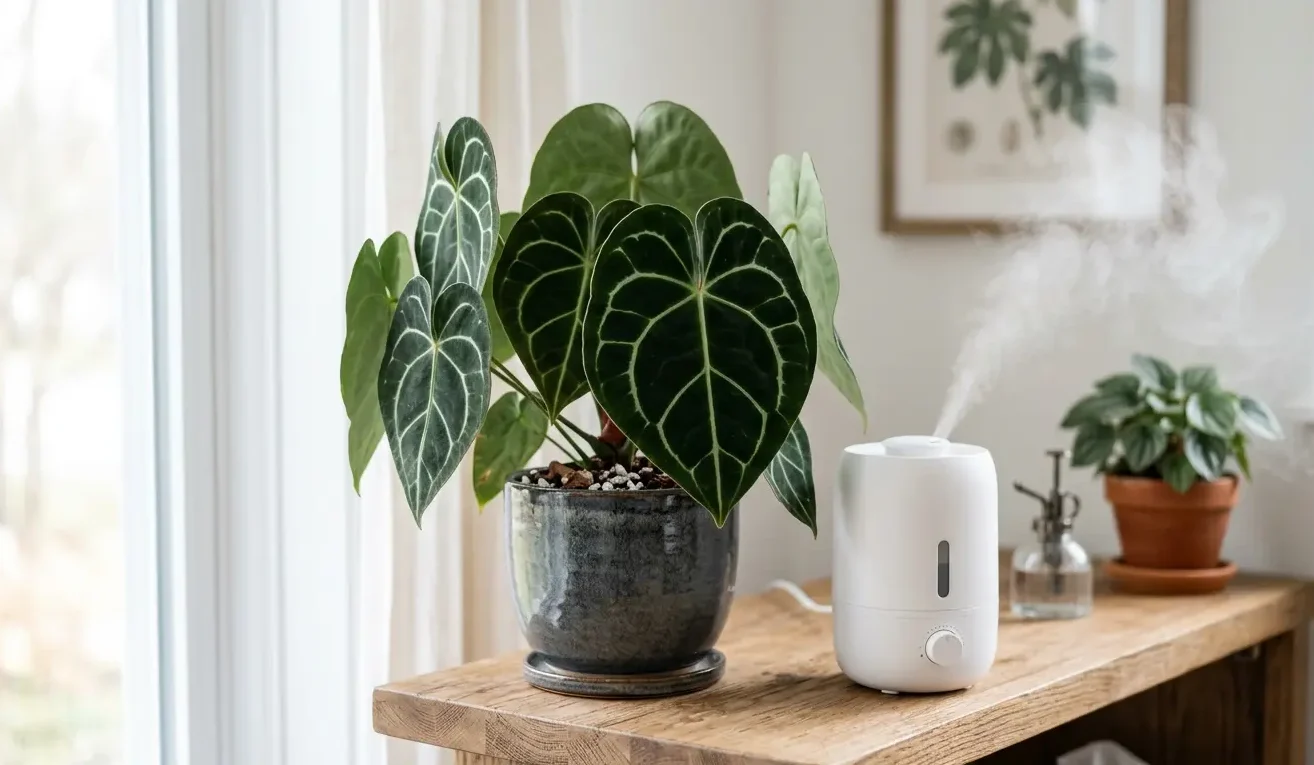
Raise humidity with a room humidifier or a wide pebble tray, and use a small hygrometer to check the real level in the room. Grouping it with other plants helps create a humid microclimate too.
One important caution: do not rely on misting. The anthurium genus is prone to fungal problems when leaves stay wet, so it is far better to humidify the air than to spray the foliage.
How often should you water an Anthurium clarinervium?
As an epiphyte, clarinervium wants its fleshy roots moist but never waterlogged. In the rainforest it gets frequent rain but drains and dries quickly thanks to airflow around its roots, and that is what you are recreating.
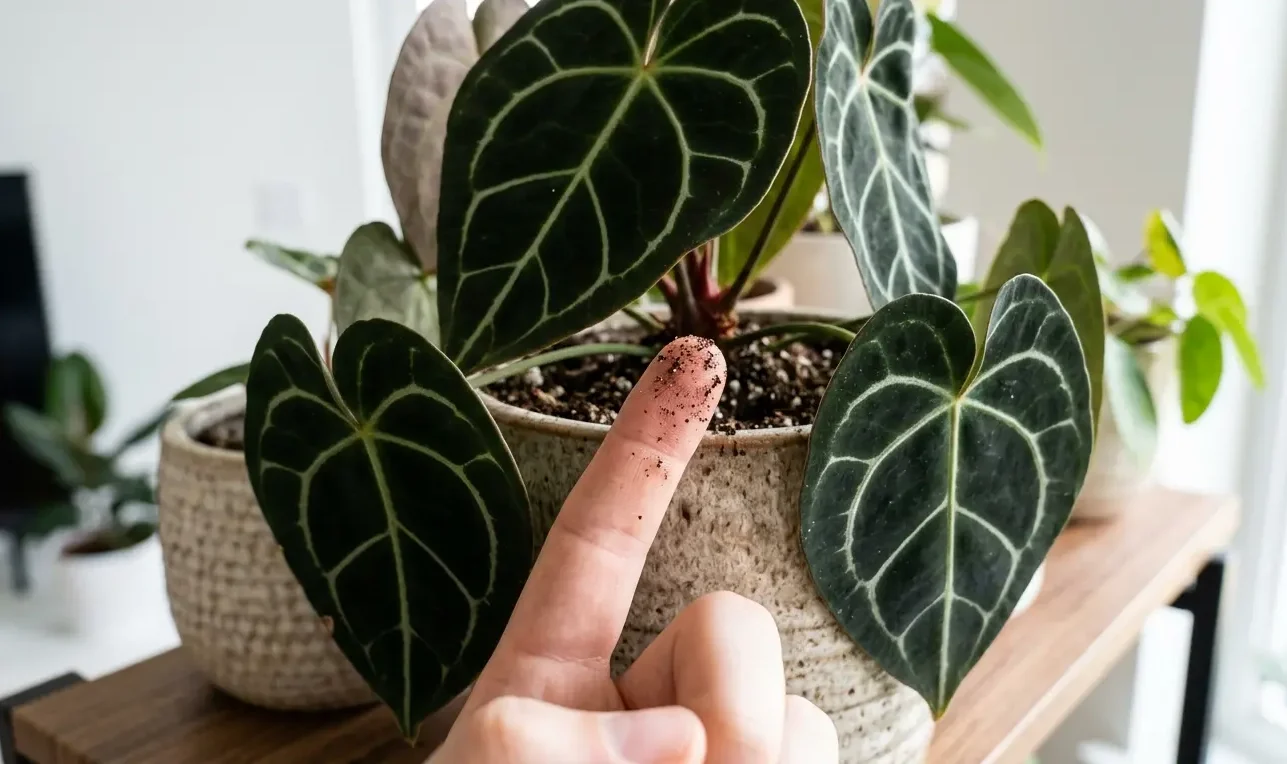
Water when the top inch of soil has dried, then water thoroughly until it drains and empty the saucer. Keep the mix evenly moist through the growing season, but never let it stay soggy.
It needs less water in winter when growth slows. Room-temperature rainwater or filtered water is ideal, since the plant is sensitive to the minerals in hard tap water.
The overwatering trap
Yellow leaves with constantly wet soil mean overwatering and likely root rot, the quickest way to lose this plant. Let the top of the soil dry before watering again, and always use an airy mix and a pot with drainage.
The best soil for an Anthurium clarinervium
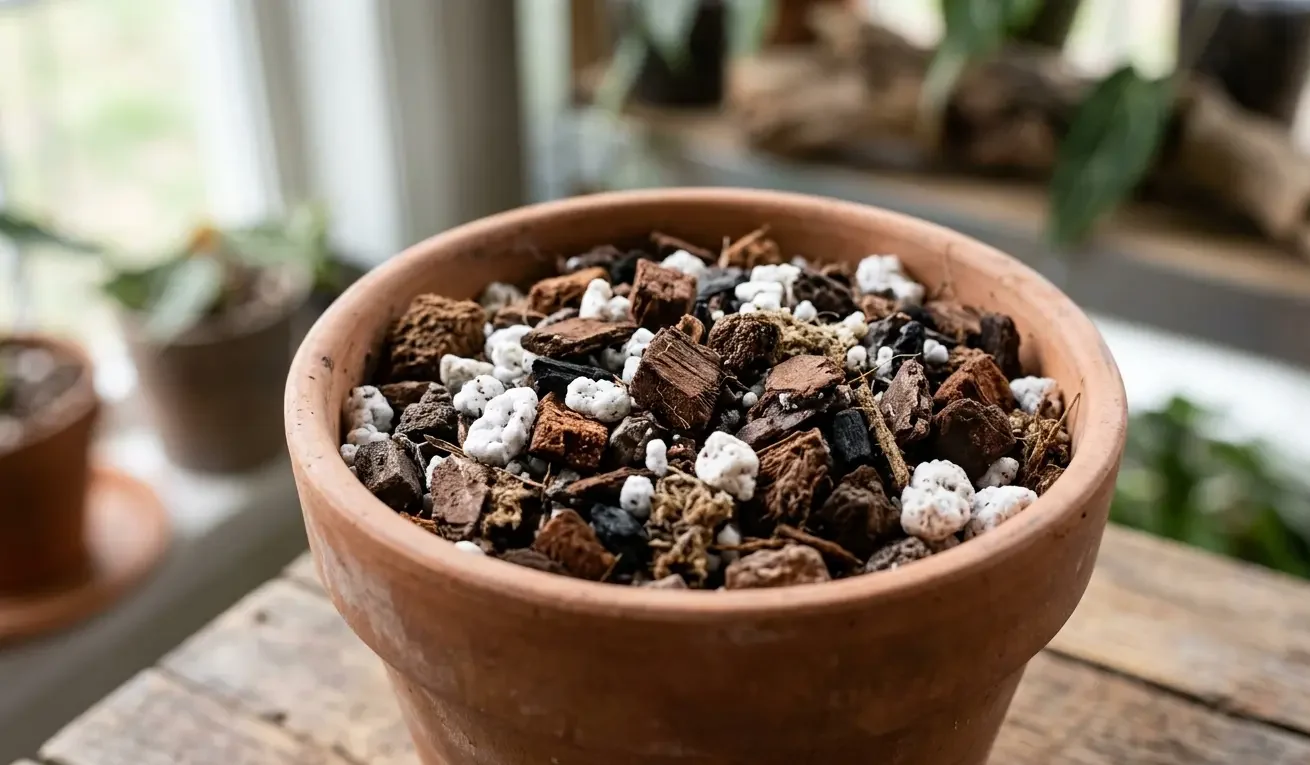
Because it is an epiphyte, clarinervium wants a chunky, airy, fast-draining mix, nothing like dense potting soil, which suffocates and rots its roots.
A good blend is potting mix with plenty of orchid bark and perlite, and a little peat or coco coir to hold light moisture. The bark and perlite keep air around the roots and let water drain fast.
Always use a pot with drainage holes, and refresh the mix every two to three years when you repot. Many growers like a slightly snug pot, since clarinervium does not need a lot of root space.
Temperature and feeding
Keep clarinervium warm, roughly 18 to 27 degrees Celsius (65 to 80 Fahrenheit). It is a tropical plant that dislikes cold, so keep it away from cold drafts and from the dry air of heating and cooling vents.
For feeding, it is a light feeder. Use a balanced liquid fertilizer diluted to half strength every month or two during the growing season, and stop in winter.
Do not overfeed. Salt buildup burns the sensitive roots and browns the leaf tips, so if you see a white crust on the soil, flush the pot with water to clear it.
How to propagate an Anthurium clarinervium
The most reliable way to propagate clarinervium is by division, rather than cuttings.
At repotting time, gently lift the plant and look for natural offshoots with their own roots. Carefully separate a section that has both healthy roots and a few leaves.
Pot the division into fresh, airy mix, keep it warm and humid, and give it bright indirect light while it establishes. Spring and summer, during active growth, are the best times to do this.
Common Anthurium clarinervium problems and how to fix them
Most clarinervium problems come down to humidity, watering, or light. Here is how to read them.
Why does my clarinervium have brown, crispy edges?
This is the classic low-humidity sign, and the most common complaint with this plant. Raise the humidity to 60 percent or more with a humidifier or pebble tray, and keep it away from drying vents.
Why are my clarinervium leaves turning yellow?
Usually overwatering. Let the top of the soil dry between waterings and make sure the mix drains freely. Hard tap water and too little light can also cause yellowing, so consider filtered water and a brighter spot.
Why won’t my clarinervium’s new leaves unfurl properly?
New leaves that stick or deform as they open usually mean the air is too dry. Higher humidity helps new leaves emerge cleanly and reach full size.
Why does my clarinervium have small new leaves?
Small new leaves usually mean not enough light or humidity. Give it bright indirect light and 60 percent or higher humidity, and the new growth should come in larger.
A note on toxicity
Like other anthuriums and the philodendrons, clarinervium is toxic to pets and people if eaten. All parts contain calcium oxalate crystals, which can cause mouth irritation, drooling, and stomach upset, and the sap can irritate skin.
Unlike the pet-safe hoyas, this is not a plant to leave within reach of curious cats and dogs, so keep it on a high shelf and wear gloves when pruning.
Is the Anthurium clarinervium worth it?
Absolutely, and it is the velvet-leaf anthurium I would point a newcomer to first. It gives you that dramatic, hand-painted velvet foliage in a compact, manageable plant, and the only real demand is humidity.
If you can provide 60 percent or higher humidity, the rest is simple, and it is a wonderful gateway into the foliage anthuriums. My roundup of the best Anthurium varieties shows where clarinervium sits among the other flowering and velvet-leaf types.
Are you trying to fix crispy edges, or get bigger leaves on your clarinervium? Leave a comment below and I will help you sort it out.
Frequently asked questions
Is Anthurium clarinervium hard to care for?
It is moderate, and the best velvet-leaf Anthurium to start with. The care itself is simple, bright indirect light, an airy mix, careful watering, but it genuinely needs high humidity, so it is a step up from easy flowering anthuriums.
Why does my clarinervium have brown crispy leaf edges?
Almost always low humidity. The velvet leaves crisp at the edges in dry air. Aim for 60 percent or higher with a humidifier or pebble tray, and new leaves should unfurl cleanly.
How often should I water an Anthurium clarinervium?
Water when the top inch of soil is dry, keeping the mix evenly moist but never soggy. Its fleshy epiphyte roots rot easily if waterlogged, so good drainage and an airy mix matter more than a fixed schedule.
Should I mist my clarinervium?
It is better not to. The Anthurium genus is prone to fungal problems when leaves stay wet, so raise humidity with a humidifier or pebble tray rather than misting the foliage directly.
How big does an Anthurium clarinervium get?
Its heart-shaped leaves reach about 8 to 12 inches, while the plant stays fairly compact overall, usually one to two feet tall with a spread up to around three feet. It is a slow to moderate grower, so it suits a tabletop or shelf.
Does Anthurium clarinervium flower?
It can, but the flowers are small and inconspicuous, a slim greenish spadix and spathe. This is a foliage plant, grown for its white-veined velvet leaves, not its blooms, so many growers remove the flowers.
Is Anthurium clarinervium toxic to pets?
Yes. Like other anthuriums and philodendrons it contains calcium oxalate crystals and is toxic to cats, dogs, and humans if chewed, and the sap can irritate skin. Keep it out of reach.
