

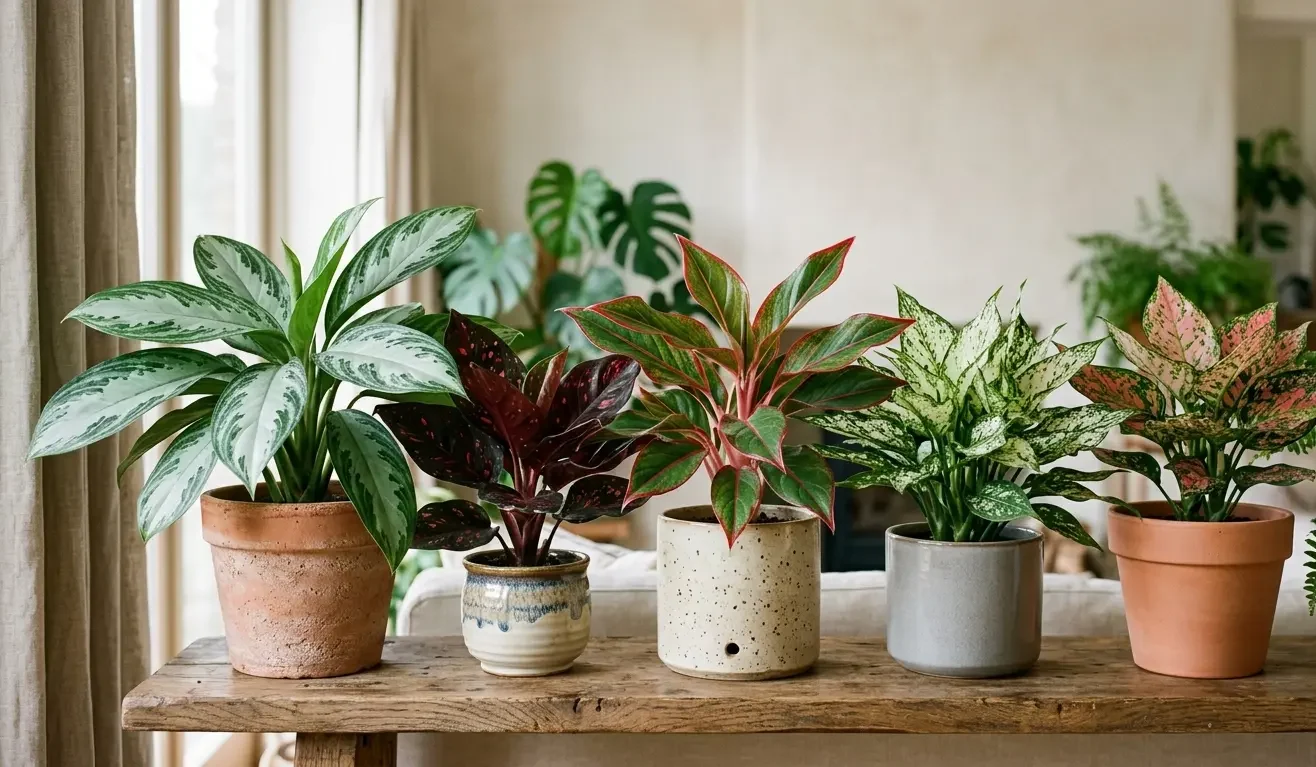
Aglaonema, commonly called Chinese Evergreen, is one of the most rewarding houseplants for almost any indoor space. The genus has been heavily hybridized over the past few decades, producing cultivars in silver, green, pink, red, and patterned variegation, with leaf shapes ranging from broad and arching to narrow and lance-like.
What makes Aglaonemas stand out is striking foliage paired with genuine tolerance for low light. Most varieties do not need a bright window to look good, which is rare among colorful houseplants. This roundup ranks the 6 best Aglaonema varieties for indoor growers, with honest notes on what makes each distinctive.
Quick answer
For beginners and low-light spots, start with Silver Bay or Maria. Silver Queen is the classic heritage cultivar. For color, Siam Aurora is the most popular red and pink variety, and Red Anjamani has the deepest red leaves. Pictum Tricolor is the unusual camouflage-patterned collector pick, but it needs more light and care.
A quick note on naming
Aglaonema cultivar names can be confusing because the same plant often goes by several trade names. Siam Aurora is also sold as Red Siam. Red Anjamani is sometimes labeled Red Majesty. Most modern cultivars are Thai or Indonesian hybrids developed for the houseplant market, rather than wild species.
The genus Aglaonema belongs to the Araceae family, the same family as philodendrons, anthuriums, and pothos. All Aglaonemas share that family’s calcium oxalate toxicity, which matters for pet owners.
1. Aglaonema Silver Bay
Silver Bay is one of the most widely sold Aglaonema cultivars and a fair starting point for the genus. The broad, lance-shaped leaves have a soft silver center bordered by deep green margins, giving a cool-toned, classic appearance. The plant grows in a tidy, upright clump.
It tolerates lower light better than the colorful red or pink varieties, which makes it ideal for offices or rooms with limited natural light. Water when the top inch of soil dries; like all Aglaonemas, it dislikes soggy roots more than it dislikes drying out.
- Light: Low to medium indirect
- Growth rate: Moderate
- Availability: Common
- Best for: Beginners, low-light rooms, classic silver-and-green look
2. Aglaonema Silver Queen
Silver Queen is the heritage cultivar that put Aglaonemas on the houseplant map. The leaves are narrower than Silver Bay and more heavily silver-marked, with light grey-silver covering most of the leaf surface and only thin green veining. It is the variety most office plant programmes used for decades.
The narrower leaves give it a slightly more refined, less bulky look than Silver Bay. It is similarly forgiving, tolerates low light well, and remains widely available. If you want a Chinese Evergreen that has actually stood the test of time, this is it.
- Light: Low to medium indirect
- Growth rate: Moderate
- Availability: Common
- Best for: Classic look, low light, reliability
3. Aglaonema Siam Aurora
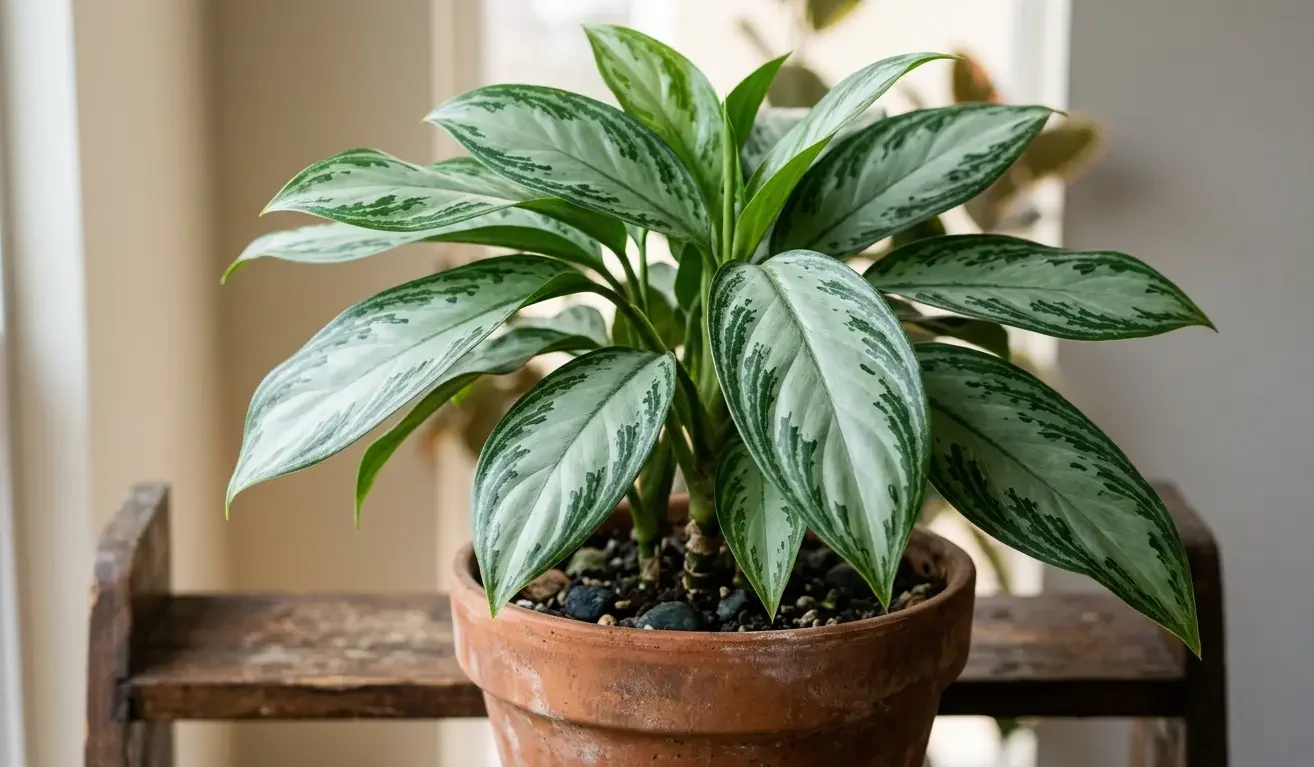
Siam Aurora, also sold as Red Siam, is the most popular colorful Aglaonema. The broad green leaves are edged and veined with bright red or pink, and the stems carry the same pinkish-red color, almost like rhubarb. It was a major breakthrough in Aglaonema breeding when introduced.
Unlike the silver varieties, Siam Aurora needs bright indirect light to keep its color vibrant. In low light, the red fades and new growth comes in greener, defeating the purpose of choosing it. Place it near a bright window (filtered, not direct sun), and the color stays strong year-round.
- Light: Bright indirect
- Growth rate: Moderate
- Availability: Common in specialty shops
- Best for: Adding bold color to a bright room
4. Aglaonema Red Anjamani
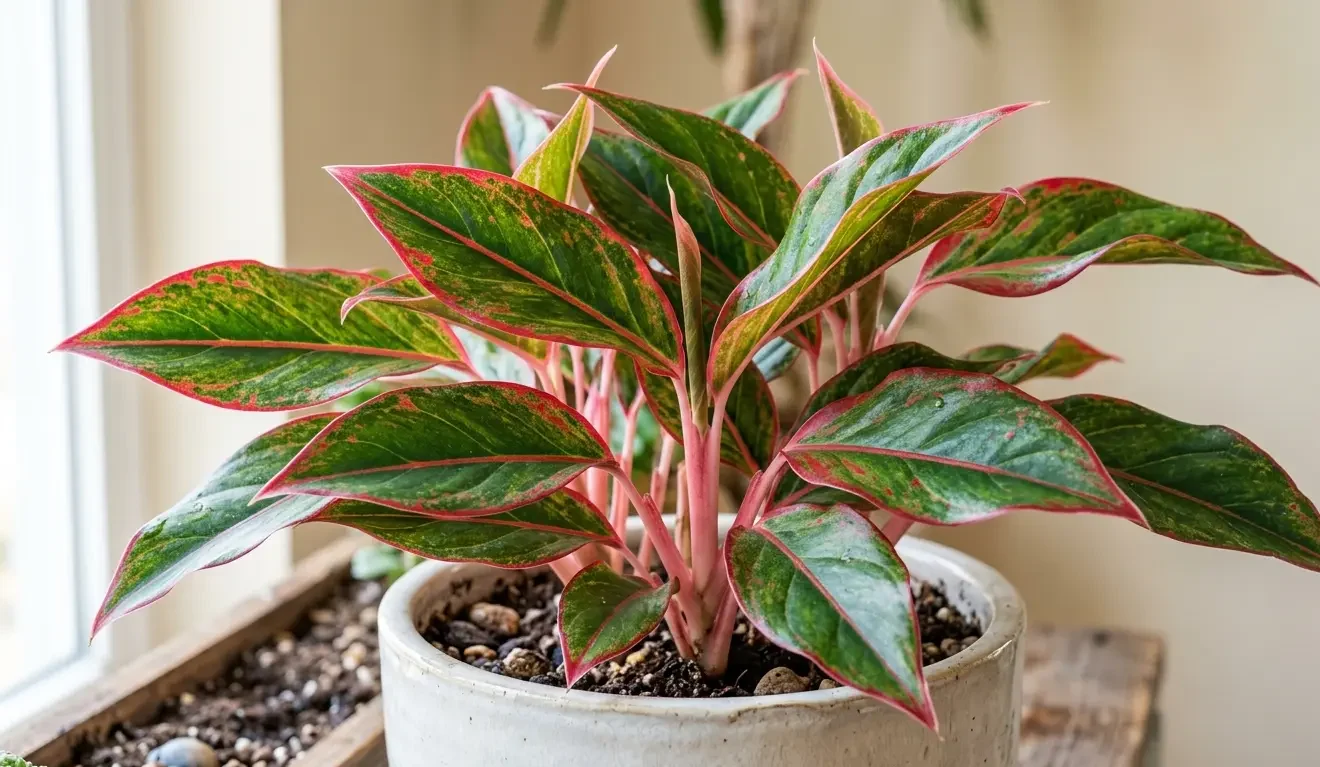
Red Anjamani, sometimes sold as Red Majesty, has the deepest red coloration of any commonly available Aglaonema. The lance-shaped leaves are almost entirely deep red, with only thin green margins along the edges and faint green veining. It looks almost unreal in person.
Like Siam Aurora, it needs bright indirect light to keep its color saturated. In low light, the red dulls and the plant grows slowly. Interestingly, some research suggests red-leaved Aglaonemas tolerate slightly cooler temperatures than green ones, though all Aglaonemas are still tropical plants and need to stay above 60°F (15°C).
- Light: Bright indirect (mandatory for color)
- Growth rate: Slow to moderate
- Availability: Specialty shops and online
- Best for: Maximum red color in a bright spot
5. Aglaonema Maria
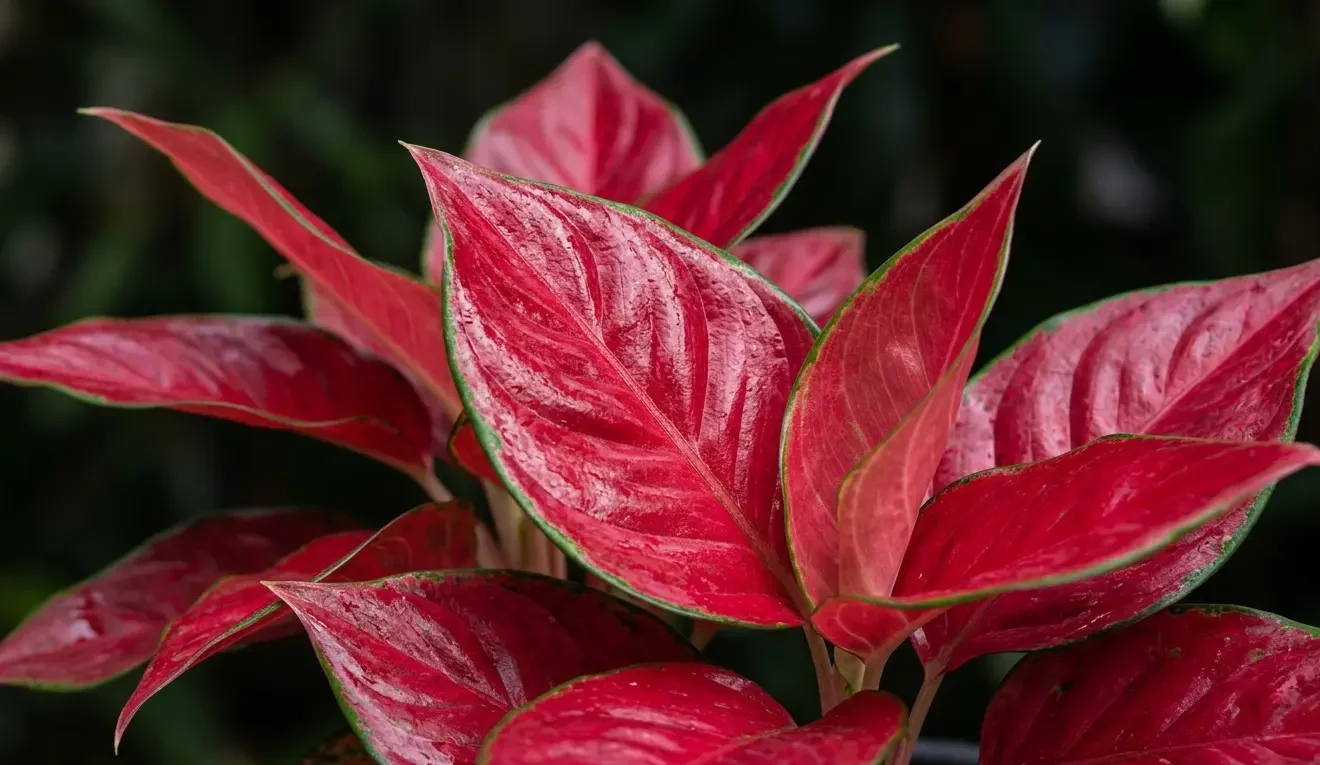
Maria is the solid green workhorse of the genus. Dark green, glossy, lance-shaped leaves with subtle lighter green markings, and a tight, upright growth habit. No bold variegation, no red, no silver, just a clean, deep-green plant that quietly looks good.
What sets Maria apart is its tolerance for low light. It is genuinely one of the best houseplants for dim corners, north-facing rooms, and offices with limited natural light. It also handles cooler temperatures better than most Aglaonemas, which makes it a strong pick for less-than-ideal indoor conditions.
- Light: Very low to medium indirect
- Growth rate: Slow to moderate
- Availability: Common
- Best for: Dark corners, offices, low-maintenance spaces
6. Aglaonema Pictum Tricolor
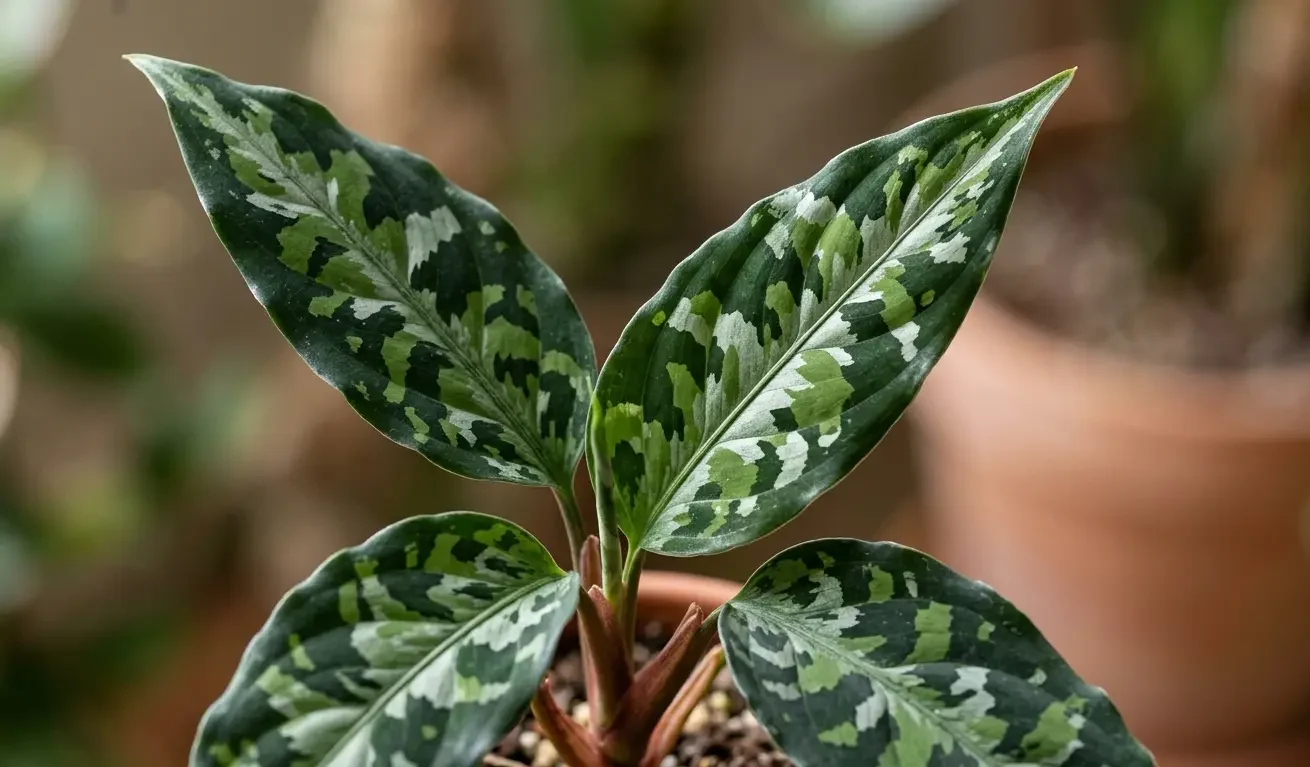
Pictum Tricolor is the genus’ collector pick and stands apart from every other Aglaonema on this list. The leaves are pointed and narrow, patterned with three shades of green (dark green, medium green, and pale silver-green) in irregular splotches that genuinely resemble military camouflage. There is nothing else quite like it.
Unlike most other Aglaonemas, Pictum Tricolor is closer to its wild Indonesian origins and prefers brighter, more humid conditions. It does not tolerate low light, does not like to dry out completely, and needs warmth and humidity above 50 percent to thrive. It is also slower-growing and harder to find than standard cultivars.
- Light: Bright indirect
- Growth rate: Slow
- Availability: Specialty shops and online
- Best for: Collectors who want a genuinely unusual Aglaonema
Honourable mentions
A few Aglaonema cultivars did not make the top 6 but are worth knowing if you are deeper into the genus:
Lady Valentine has almost entirely rose-pink foliage with minimal green, similar to Red Anjamani but pinker. A striking pick for very bright homes.
Sparkling Sarah has bright green leaves with bubblegum-pink veining and splashes, less saturated than Siam Aurora but with a more playful look.
Emerald Bay is similar in form to Silver Bay but with broader, fluttier leaves and a stronger emerald green tone in the margins.
Stripes has lime-green leaves with symmetrical narrow silvery stripes arching from the centerline, a more graphic look than the marbled silver varieties.
How to choose the right Aglaonema
The right variety depends on your light and what look you want.
For low-light rooms, choose green or silver varieties: Maria, Silver Bay, or Silver Queen. They keep their color and grow steadily without bright light.
For medium light, all of the silver and green varieties work well, and the lighter red varieties like Siam Aurora can hold reasonable color.
For bright spots near a window, the red and pink varieties (Siam Aurora, Red Anjamani, Lady Valentine) finally get the light they need to keep their color saturated. Pictum Tricolor also belongs here.
For a quick decision, the order I would suggest is: Maria or Silver Bay (easiest), then Silver Queen or Siam Aurora (more interesting), then Red Anjamani or Pictum Tricolor (collector territory).
Variety identification at the nursery
If the leaves are silver-centered with dark green margins, it is Silver Bay (broader leaves) or Silver Queen (narrower, more silver). If the leaves are green with red or pink edges, it is Siam Aurora. If the leaves are almost entirely red with thin green margins, it is Red Anjamani or Red Majesty. If the leaves are solid dark green with subtle lighter markings, it is Maria. If the pattern looks like camouflage, it is Pictum Tricolor.
A note on toxicity and pet safety
All Aglaonema varieties contain calcium oxalate crystals and are toxic to cats and dogs if chewed. Symptoms include oral irritation, drooling, vomiting, and difficulty swallowing. This applies to every cultivar above, no Aglaonema is pet-safe.
If you have curious pets, consider keeping Aglaonemas out of reach, training pets to avoid plants, or choosing a pet-safe alternative. Our pet-safe houseplant roundup covers safer options including hoyas, peperomias, and Calatheas.
Common care quirks across all Aglaonemas
A few things hold true for the whole genus and are worth knowing before you bring one home.
They dislike cold. Anything below 60°F (15°C) stresses the plant, and prolonged cold can cause leaf damage. Keep them away from cold windows and drafts in winter.
They want soil that dries between waterings. Overwatering is the most common cause of failure. Let the top inch dry, then water thoroughly. Drainage holes are essential.
They flower indoors. Aglaonemas produce small calla-lily-style flowers in spring or summer. Many growers remove them to redirect energy into foliage, which is genuinely worth doing for colorful cultivars.
Tap water can cause leaf-tip browning. Aglaonemas, like Calatheas, can be sensitive to fluoride and chlorine in tap water. If you see brown leaf tips on otherwise healthy plants, try filtered or rainwater.
Final thoughts
Aglaonemas are one of the most underrated genera in the houseplant world. They combine genuine ease of care, tolerance for less-than-perfect light, and some of the most striking foliage colors you can grow indoors. If your home runs short on bright windows, this is the genus to lean into.
Start with Maria or Silver Bay if you are new to the genus. Move into Siam Aurora when you want color, and Red Anjamani or Pictum Tricolor when you are ready for collector territory. Daily care is similar across the genus, so once you know how to water one, you can care for all.
Frequently Asked Questions
Which Aglaonema variety is the easiest to care for?
Maria and Silver Bay are the easiest Aglaonema varieties. Both tolerate low light, irregular watering, and average humidity. They are excellent picks for beginners or for offices with limited natural light.
Do red Aglaonema varieties need more light than green ones?
Yes. Red and pink Aglaonemas like Siam Aurora and Red Anjamani need brighter indirect light to keep their color vibrant. In low light, the red and pink tones fade and the plant produces greener growth.
Are Aglaonemas safe for cats and dogs?
No. All Aglaonemas contain calcium oxalate crystals and are toxic to cats and dogs if chewed. They can cause oral irritation, drooling, and vomiting. Keep them out of reach, or choose a pet-safe alternative.
Why are the leaves of my Aglaonema turning yellow?
The most common cause is overwatering. Aglaonemas like soil to dry out partially between waterings; soggy roots cause yellowing and eventual root rot. Cold drafts and low humidity can also stress the plant and trigger yellowing.
Can Aglaonemas grow in low light?
Green and silver varieties like Maria, Silver Bay, and Silver Queen tolerate low light well. Red, pink, and heavily variegated cultivars like Siam Aurora and Pictum Tricolor need more light to keep their color.
