


The Hoya Krimson Princess is one of the most beautiful variegated wax plants you can grow, a cultivar of the reliable Hoya carnosa with thick waxy leaves splashed in cream, pink, and yellow down their centers. Krimson Princess care is essentially easy carnosa care, with a little extra attention to light to keep that gorgeous variegation strong. It trails or climbs happily, smells wonderful in bloom, and is forgiving enough for a confident beginner.
Short answer
Give a Hoya Krimson Princess bright indirect light to keep its cream and pink variegation strong, water only when the top inch or two of soil dries, and use a very airy fast-draining mix. Its variegation sits in the center of the leaf with green edges, which is how you tell it from the Krimson Queen. Too little light is the main reason it reverts to green.
This guide covers light, watering, soil, the variegation, blooming, and how to tell a Krimson Princess from its near-twin the Krimson Queen. It follows the same core rules as the rest of the genus, so if you want the wider picture my Hoya care guide covers the basics that apply here too.
What is a Hoya Krimson Princess?
The Krimson Princess is a variegated cultivar of Hoya carnosa, the classic wax plant. It has the same thick, glossy, semi-succulent leaves as a plain carnosa, but each leaf is splashed in the center with cream, pink, and yellow, surrounded by green margins. New growth often comes in especially pink, and some leaves can be almost fully white or pink. Its stems are pinkish when young, maturing to green, and it grows as a trailing or climbing vine.
Like all carnosa cultivars it is tough, drought-tolerant, and pet-safe, and when mature it produces the classic carnosa flower: clusters of fragrant, star-shaped pink blooms with a deep red center.
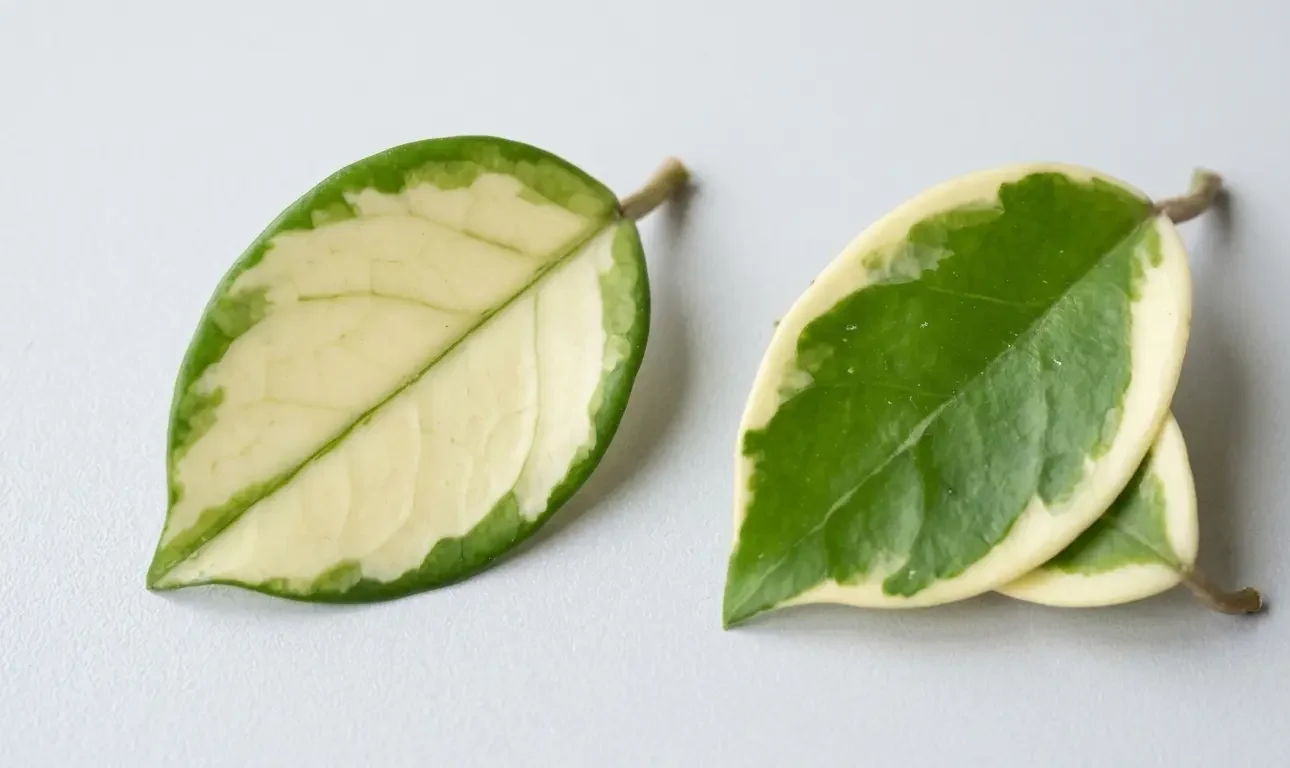
Krimson Princess vs Krimson Queen: how to tell them apart
This is the question everyone asks, because the Krimson Princess and Krimson Queen are constantly confused and frequently mislabeled in shops, even by experienced collectors.
The answer is simple once you know it: look at where the cream variegation sits on the leaf. The Krimson Princess has its variegation in the center of the leaf, with solid green edges. The Krimson Queen is the exact opposite, with variegated cream edges and a green center. The easiest way to remember it is the saying: a queen wears a white crown, and a princess wears a white gown. So the Queen’s variegation is around the edge like a crown, and the Princess’s is in the middle like a gown. The flowers are nearly identical on both, so always identify them by the leaf pattern, not the bloom.
Quick care summary
Here is the whole routine at a glance before the detail.
| Need | What the Krimson Princess wants |
|---|---|
| Light | Bright indirect light, no harsh direct sun |
| Water | When the top inch or two of soil is dry |
| Soil | Very airy, fast draining, with bark and perlite |
| Humidity | Average to high, 50 percent or more is ideal |
| Temperature | 16 to 29 degrees Celsius, 60 to 85 Fahrenheit |
| Pot | Snug, slightly root-bound encourages blooms |
| Difficulty | Easy to moderate, mainly the variegation |
| Toxicity | Non-toxic and pet-safe |
How much light does a Krimson Princess need?
Light matters more for the Krimson Princess than for a plain carnosa, because its variegation depends on it, and because its variegation actually makes light a little more important.
The Krimson Princess wants bright indirect light. A spot near an east or west window, or just back from a brighter south-facing one, is ideal. Avoid harsh direct sun, which scorches the waxy leaves. Here is the key point: because the Princess carries its cream and pink in the center of the leaf, where the chlorophyll would otherwise be, it has slightly less green tissue to feed itself than the Queen does. That makes it a touch slower growing and a little hungrier for light. In a dim spot it produces greener, plainer leaves to survive, so if you want to keep that beautiful centered variegation, give it strong indirect light.
Keeping the variegation strong
If new leaves are coming in greener, give the plant more bright indirect light before anything else. Light, not fertilizer, is what keeps a variegated Hoya’s cream and pink coming in.

How often should you water a Krimson Princess?
Like all Hoyas, the Krimson Princess stores water in its waxy leaves and is far more often killed by overwatering than by neglect.
Water only when the top inch or two of soil has dried out, then water thoroughly until it drains and empty the saucer. In warm, bright months this might be weekly; in winter, much less. Because it is a variegated plant with less green tissue, it recovers slowly from stress, so it is better to err on the dry side. The leaves will pucker slightly when the plant is genuinely thirsty, which is your cue to water.
The overwatering trap
Yellow, soft leaves with damp soil mean overwatering, not thirst. A variegated Hoya bounces back slowly, so let the soil dry properly before watering again and make sure the pot drains freely.

The best soil and pot for a Krimson Princess
As a carnosa cultivar and an epiphyte, the Krimson Princess wants a very loose, airy, fast-draining mix, much chunkier than standard potting soil.
A good blend is about one part potting mix, one part orchid bark, and one part perlite, which drains fast and keeps air around the roots. Always use a pot with drainage holes. Like other Hoyas, it prefers to be snug in its pot, so do not over-pot it; a slightly root-bound plant in a container only a little larger than the roots is healthiest and, once mature, more likely to bloom.
Humidity and temperature for a Krimson Princess
The Krimson Princess is comfortable in normal home conditions and appreciates a little extra humidity.
Keep it warm, roughly 16 to 29 degrees Celsius (60 to 85 Fahrenheit), and away from cold drafts; avoid prolonged dips below about 13 degrees Celsius (55 Fahrenheit). Average household humidity is fine, but 50 percent or higher supports lusher growth and better blooms. A pebble tray or small humidifier helps in very dry air.
How to fertilize and bloom a Krimson Princess
Feeding supports growth and the plant’s fragrant flowers.
Feed every four to six weeks through spring and summer with a balanced houseplant fertilizer diluted to half strength, and stop in winter. A higher-phosphorus bloom fertilizer can encourage flowering in a mature plant. When it blooms, the Krimson Princess produces clusters of star-shaped pink flowers with a deep red center and a sweet scent. As with all Hoyas, never cut off the peduncle, the woody stalk the flowers grow from, because the plant reblooms from the same spot year after year. Keeping it slightly root-bound and in bright light encourages blooming, but a young plant may take a while to mature.

How to propagate a Krimson Princess
The Krimson Princess propagates from stem cuttings, with one rule specific to variegated plants.
Take a cutting with at least two nodes, the small bumps where leaves attach, and make sure it includes some green tissue, not just cream or pink, because an all-variegated cutting cannot feed itself and will not survive. You can let the cut end callus for a day to reduce rot, then root the cutting in water or in your usual chunky mix, kept in bright indirect light. Roots appear over a few weeks. Spring and summer are the best times, when the plant is actively growing.
Common Krimson Princess problems and how to fix them
Most problems trace back to light, water, or the demands of the variegation.
Why is my Krimson Princess losing its variegation?
Greener new leaves mean not enough light to support the cream and pink sections. Move it to a brighter spot with strong indirect light, out of harsh direct sun, and new growth should come back more variegated.
Why does my Krimson Princess have all-white or pink leaves?
This is just heavy variegation. Fully white or pink leaves have no chlorophyll, so they cannot feed the plant and often die off naturally. It is normal, and not a sign you are doing anything wrong.
Why are my Krimson Princess leaves turning yellow?
Soft, yellow leaves with damp soil usually mean overwatering. Let the soil dry out fully, ensure the mix drains, and water less often.
Why won’t my Krimson Princess bloom?
Usually the plant is too young, not getting enough light, or in too large a pot. Give it bright light, keep it slightly root-bound, be patient, and make sure you have not removed the peduncles.
A note on pet safety
Like other Hoyas, the Krimson Princess is considered non-toxic and pet-safe, so it is a worry-free choice for homes with cats and dogs, unlike many popular foliage plants. It is still best not to let pets nibble houseplants, but this one will not poison them.
Is the Hoya Krimson Princess worth it?
Yes. You get the toughness and easy care of the classic Hoya carnosa with a far more colorful, collectible look, and the centered cream-and-pink variegation is genuinely striking. As long as you give it good light and avoid overwatering, it is an easy, rewarding plant. My roundup of the best Hoya varieties for beginners shows where the Krimson Princess and its sibling the Krimson Queen sit among the other easy and collectible types.
Are you trying to keep the variegation strong, or trying to tell your plant apart from a Krimson Queen? Leave a comment below and I will help you sort it out.
Frequently asked questions
How do I tell a Krimson Princess from a Krimson Queen?
Look at where the cream variegation sits. The Krimson Princess has variegation in the center of the leaf with green edges, while the Krimson Queen has variegated edges with a green center. A handy trick is “a queen wears a crown, a princess wears a gown.”
Is Hoya Krimson Princess hard to care for?
No, it is an easy Hoya carnosa cultivar. The only extra attention it needs over a plain carnosa is good bright light, because its centered variegation means less green tissue to feed the plant.
Does Hoya Krimson Princess climb or trail?
Both. Like other Hoya carnosa cultivars it is a vining plant that trails attractively from a hanging pot or climbs a small trellis or moss pole if you train it. Train it early for the fullest growth.
How often should I water a Krimson Princess?
Water only when the top inch or two of soil has dried out. Like all Hoyas it stores water in its waxy leaves and prefers to dry between waterings, so overwatering is the main risk.
How fast does Hoya Krimson Princess grow?
A little slower than a plain green carnosa or the Krimson Queen, because its centered variegation leaves less green tissue for photosynthesis. Bright light, warmth, and feeding in the growing season give it its best pace.
What color are Krimson Princess flowers?
When mature and in good light, it produces clusters of star-shaped pink flowers with a deep red center and a sweet fragrance, the classic Hoya carnosa bloom.
Is Hoya Krimson Princess toxic to pets?
No. Like other Hoyas it is considered non-toxic and pet-safe, so it is a good choice for homes with cats and dogs.
