

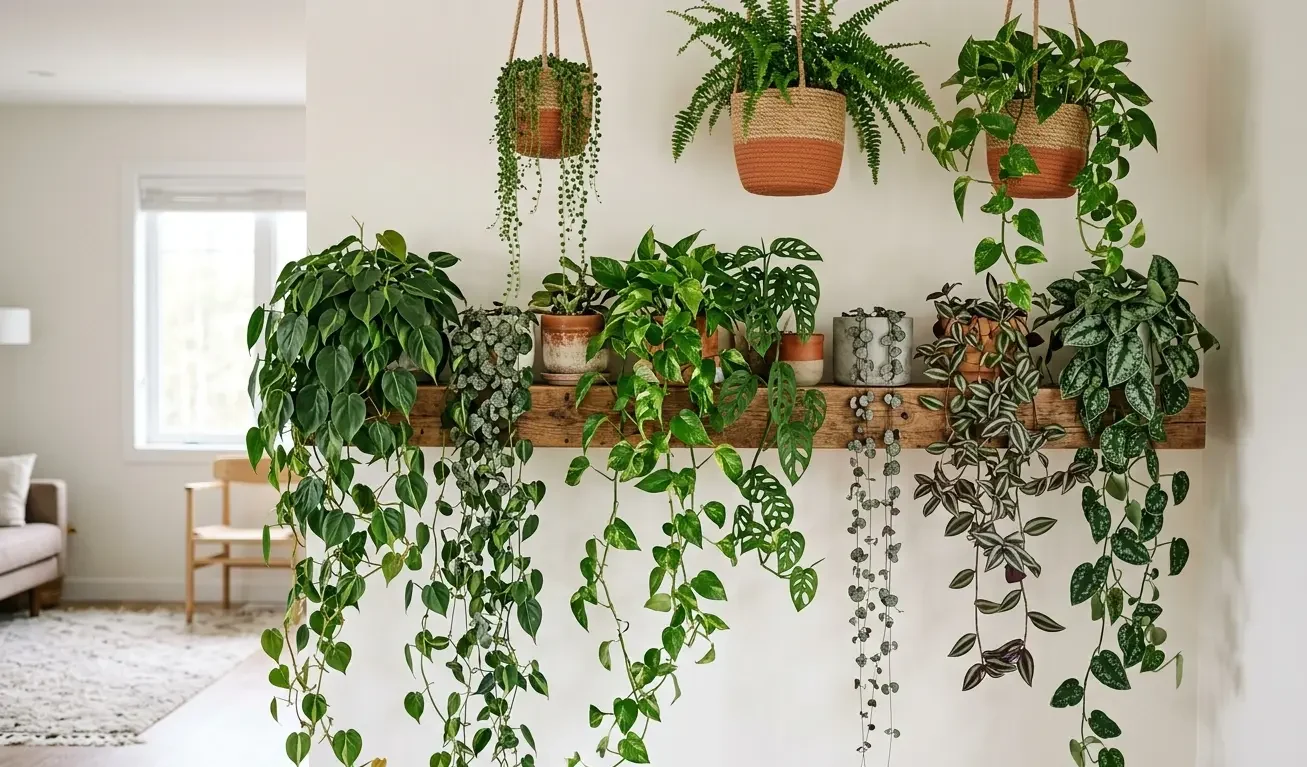
There is something magical about a plant that spills. A trailing vine cascading off a high shelf or tumbling from a hanging basket adds height, softness, and life to a room without using an inch of floor space. It is the easiest way to bring greenery to small spaces.
The plants below are the best trailers for shelves and baskets: some grow fast and forgive neglect, others are delicate showpieces. For each, I have noted the light it needs, how it trails, and, importantly for shelves within a pet’s reach, whether it is safe around cats and dogs.
Short answer
For an easy, fast trailer that handles low light, start with pothos or heartleaf philodendron (both toxic, so hang them high). For a pet-safe shelf, choose a spider plant, string of hearts, or Hoya. For delicate strands in a bright spot, try string of hearts or string of pearls.
What makes a good trailing plant?
A few things. The best trailers have long, flexible stems that cascade rather than stand upright, they tolerate life in a raised pot or basket, and many are easygoing enough to handle the slightly trickier watering that hanging containers bring.
One thing worth knowing up front: trailing plants chase the light. They will grow long and full toward the brightest direction and go sparse and bare where it is dim. So the brighter and more even the light, the fuller your trails will be.
And because trailing plants are so often displayed up high, on shelves, mantels, and in hanging baskets, they are a smart way to keep toxic plants out of a pet’s reach. I will flag pet safety for each one, since it genuinely matters here.
The 10 best trailing houseplants
1. Pothos (Devil’s Ivy)
Quick take: The easiest, fastest trailer there is, and the best for low light. Toxic to pets.
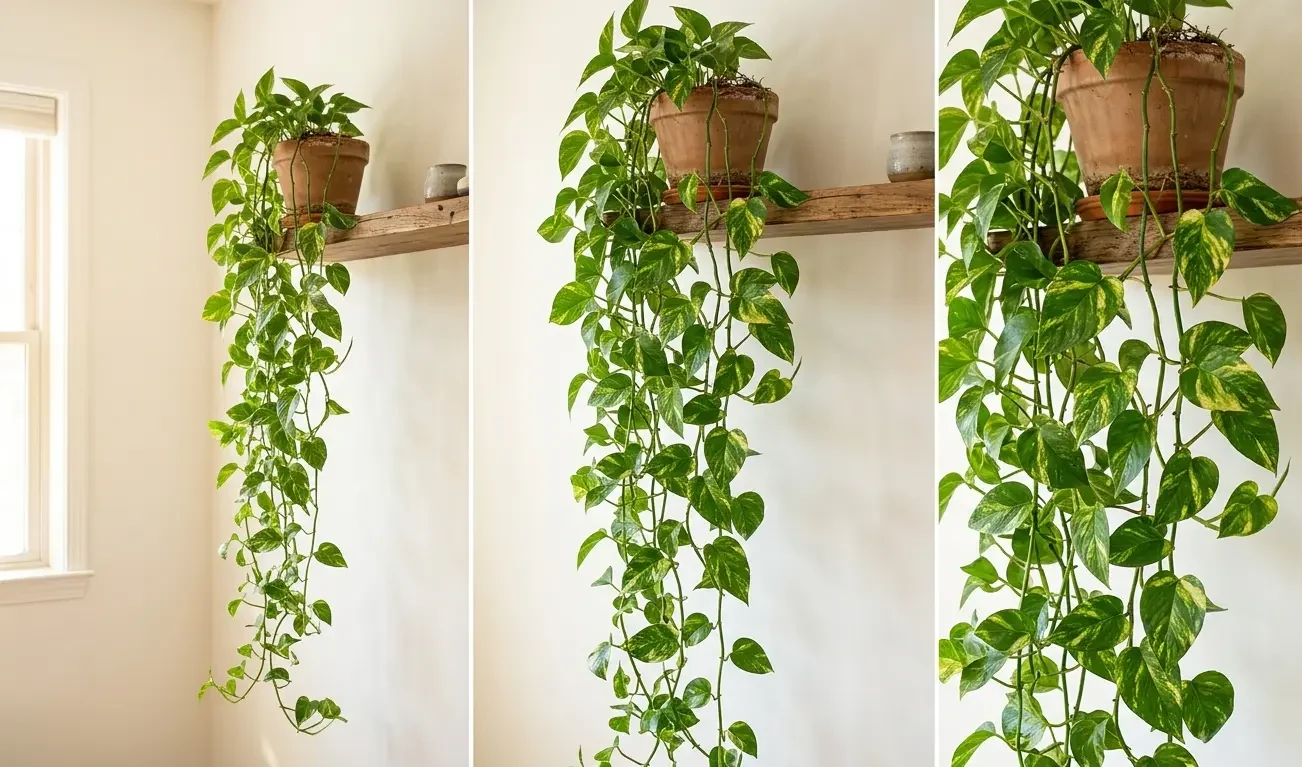
Pothos is the trailing plant I recommend first to almost everyone. Its heart-shaped leaves come in green, golden, neon, and variegated forms, and the vines grow quickly to several feet, cascading beautifully off a shelf.
It tolerates low light and irregular watering better than almost any other trailer, and roots so easily from cuttings that one plant becomes many. The one caveat: pothos is toxic to pets if chewed, so hang it high. For the full routine, see my pothos care guide.
2. Heartleaf Philodendron
Quick take: Pothos’s equally easy cousin, with softer, deep-green hearts. Toxic to pets.
The heartleaf philodendron is the other champion of easy, low-light trailing. Its glossy, deep-green, heart-shaped leaves trail fast and full, and like pothos, it tolerates dim corners and forgiving watering.
There is also the gorgeous velvet-leaved Philodendron micans, with bronze-green velvety foliage, for something a little special. Both are toxic to pets if chewed, so keep them up high. For more, see my philodendron care guide.
3. String of Hearts (Ceropegia woodii)
Quick take: Delicate, fast-growing strands of tiny hearts on fine stems. Pet-safe.
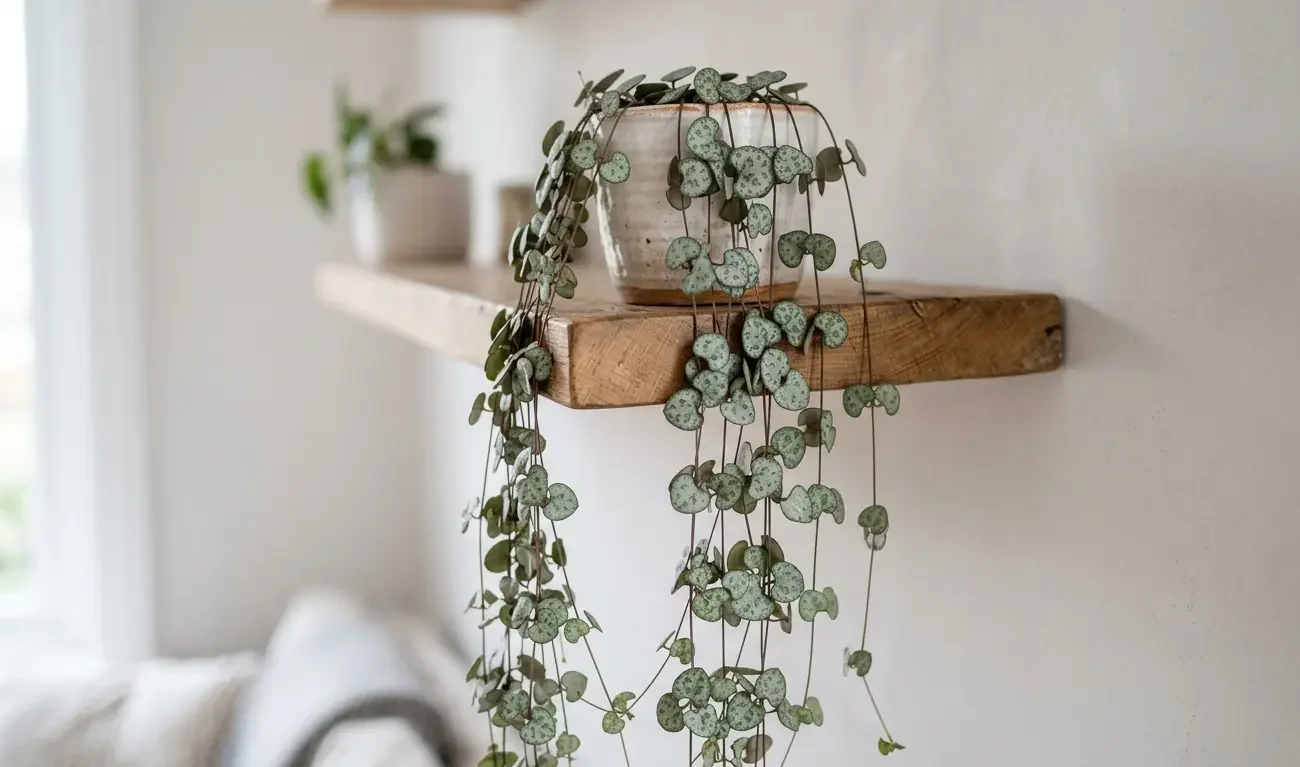
String of hearts is one of the most charming trailers you can grow, with thin, silvery stems lined with small, heart-shaped leaves that can cascade two to three feet or more. It grows quickly once settled.
It needs more light than pothos, so give it a bright spot out of harsh sun. A useful point for pet owners: string of hearts is generally considered non-toxic and pet-safe, unlike its lookalike, string of pearls.
[ IMAGE NEEDED: trailing-plant-string-of-hearts.jpg ] PROM
4. Hoya (Wax Plant)
Quick take: Waxy-leaved trailers that can reward you with fragrant flowers. Pet-safe.
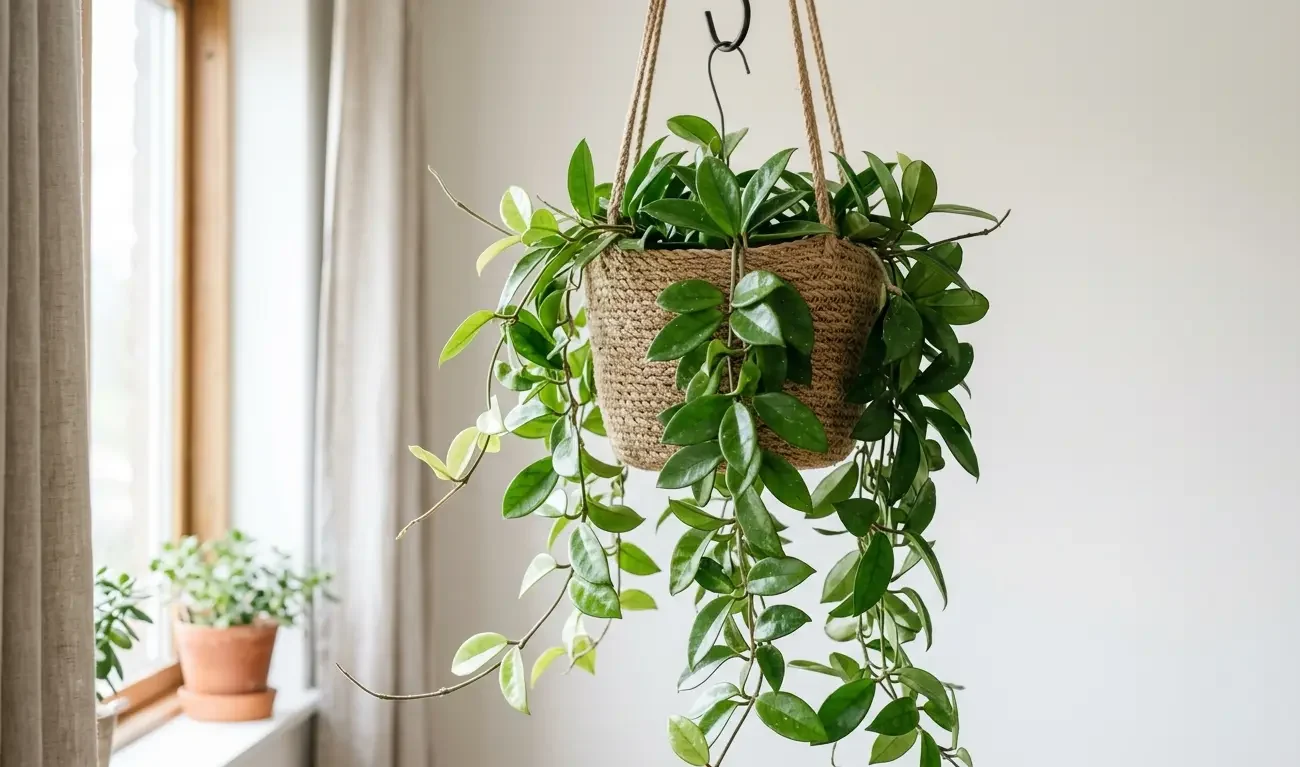
Hoyas are wonderful trailing plants, with thick, waxy leaves and, when happy, clusters of sweet-scented star-shaped flowers. Hoya carnosa is the classic, while trailing types like Hoya linearis form long, curtain-like strands of slender foliage.
They like bright, indirect light and prefer to dry out between waterings, true to their semi-succulent nature. Best of all for shared homes, Hoyas are pet-safe. For more, see my Hoya care guide.
5. String of Pearls (Senecio rowleyanus)
Quick take: Showstopping strands of bead-like leaves. Striking but toxic to pets.
Few plants draw the eye like string of pearls, with its trailing stems of round, pea-like beads spilling over a pot’s edge. It is a true conversation piece in a bright spot.
This is a succulent, so it wants bright light and well-draining soil, and prefers to dry out between waterings. One important note: unlike string of hearts, string of pearls is toxic to cats and dogs, so keep it well out of reach.
6. String of Turtles (Peperomia prostrata)
Quick take: Tiny, patterned, turtle-shell leaves on compact trailing stems. Pet-safe.
String of turtles is a slow, dainty charmer, with small round leaves patterned like little turtle shells on delicate trailing stems. It stays more compact than the big trailers, making it perfect for a small shelf.
It likes bright, indirect light and a careful hand with water, since the small leaves are easy to overwater. As a Peperomia, it is pet-safe, a lovely, low-risk choice. For more, see my Peperomia care guide.
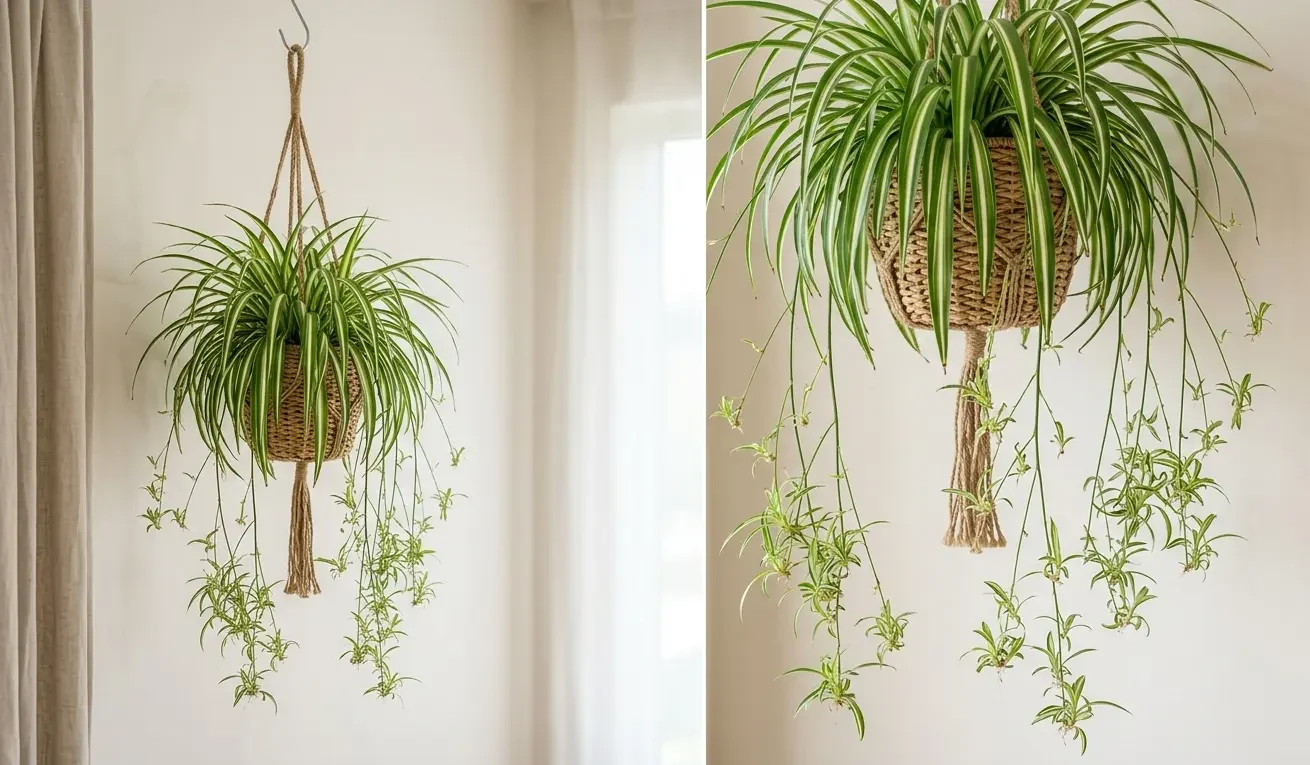
7. Spider Plant (Chlorophytum comosum)
Quick take: The classic pet-safe trailer, with arching striped leaves and baby plantlets. Pet-safe.
The spider plant is one of the toughest, most forgiving trailers, and a top pet-safe choice. From a hanging basket, its arching green-and-white striped leaves spill out, and it sends down long stems tipped with baby “pups” you can pot up into new plants.
It adapts to a wide range of light and inconsistent watering, and is famously easy. Non-toxic and pet-friendly, it is a worry-free pick for homes with curious cats and dogs.
8. Tradescantia (Inch Plant)
Quick take: Fast, colorful trailing stems in purple, silver, and green. Mildly toxic.
Tradescantia, also called inch plant or wandering dude, is one of the fastest, most colorful trailers, with stems of green, silver, and rich purple that grow vigorously and root in water almost instantly.
It tolerates lower light than many colorful plants, though it keeps its best color in bright light. One note: Tradescantia is mildly toxic and its sap can irritate skin, so keep it out of reach of pets and wash your hands after pruning.
9. Rhipsalis (Mistletoe Cactus)
Quick take: Soft, pencil-thin draping stems on a jungle cactus. Pet-safe.
Rhipsalis is a forest cactus, not a desert one, so forget spines and drought. It produces a soft tangle of thin, trailing stems that drape gracefully from a basket, with a fresh, modern look.
Being from rainforests, it likes bright, indirect light and slightly more moisture than a typical cactus. It is low-maintenance and pet-safe, a great choice for an easygoing, unusual trailer.
10. English Ivy (Hedera helix)
Quick take: A classic, elegant trailing vine with lobed leaves. Toxic to pets.
English ivy is the timeless trailing plant, with lobed green or variegated leaves that cascade and even climb if given support. It brings a soft, cottage-garden elegance to a shelf or basket.
It prefers bright, indirect light and evenly moist soil, and benefits from the occasional trim to stay full. Note that English ivy is toxic to pets if chewed, so as with pothos and philodendron, place it where pets cannot reach.
A quick pet-safety guide to trailing plants
Because trailing plants so often sit on shelves and in hanging baskets within a curious pet’s reach, it is worth being clear about which are safe.
Pet-safe trailers from this list include the spider plant, string of hearts, Hoya, string of turtles, and Rhipsalis. Swedish ivy (not true ivy) is another good non-toxic option with a pothos-like look.
Toxic trailers to keep well out of reach include pothos, heartleaf philodendron, string of pearls, and English ivy, while Tradescantia is mildly toxic and irritant. The good news is that hanging these high is itself a sound safety strategy, just make sure no trailing vines dangle low enough to tempt a cat.
How to keep trailing plants full and happy
Trailing plants are easy, but a few habits keep them lush rather than leggy. Give them the brightest light the plant will take, since sparse, bare vines almost always mean too little light.
Rotate the pot now and then so the plant trails evenly rather than reaching to one side, and pinch or trim the vines back when they get long. This encourages fuller growth near the top, and the cuttings root easily to make new plants.
Finally, watch out for warm surfaces: vines resting on a hot radiator cover, mantel, or heat vent can crisp and may not recover, so let them drape freely into open air.
Which trailing plant are you eyeing for your shelf, an easy pothos or something delicate like string of hearts? Tell me your light and whether pets are a factor in the comments, and I will help you choose.
Frequently asked questions
What is the easiest trailing houseplant?
Pothos is the easiest by far. It trails fast, tolerates low light and irregular watering, and roots readily from cuttings. Heartleaf philodendron is a close second. Both are forgiving for beginners, though both are toxic to pets if chewed.
Which trailing plants are safe for cats and dogs?
Pet-safe trailing plants include the spider plant, string of hearts, Hoya, string of turtles (Peperomia), Swedish ivy, and Rhipsalis (mistletoe cactus). Note that string of pearls, pothos, philodendron, and English ivy are toxic, so keep those out of reach.
Is string of hearts or string of pearls pet-safe?
This trips a lot of people up. String of hearts (Ceropegia woodii) is generally considered non-toxic and pet-safe, while string of pearls (Senecio rowleyanus) is toxic to cats and dogs. They look similar and are often confused, but their pet safety is different.
What trailing plants grow well in low light?
Pothos and heartleaf philodendron handle genuinely low light better than almost any other trailing plant, and still trail long and fast. Most others, especially the string-of plants, need bright light, so match the plant to the spot.
How long do trailing houseplants grow?
It varies a lot. Pothos and philodendron vines can reach several feet indoors, string of hearts and string of pearls can trail two to three feet or more, and Hoyas grow long over time. You can always trim and propagate to keep them tidy.
Why is my trailing plant bare or sparse at the top?
Usually too little light, or vines trailing into shadow. Trailing plants chase the brightest direction, so growth thins where it is dark. Move it brighter, rotate it, and pinch the vines back to encourage fuller growth near the base.
