

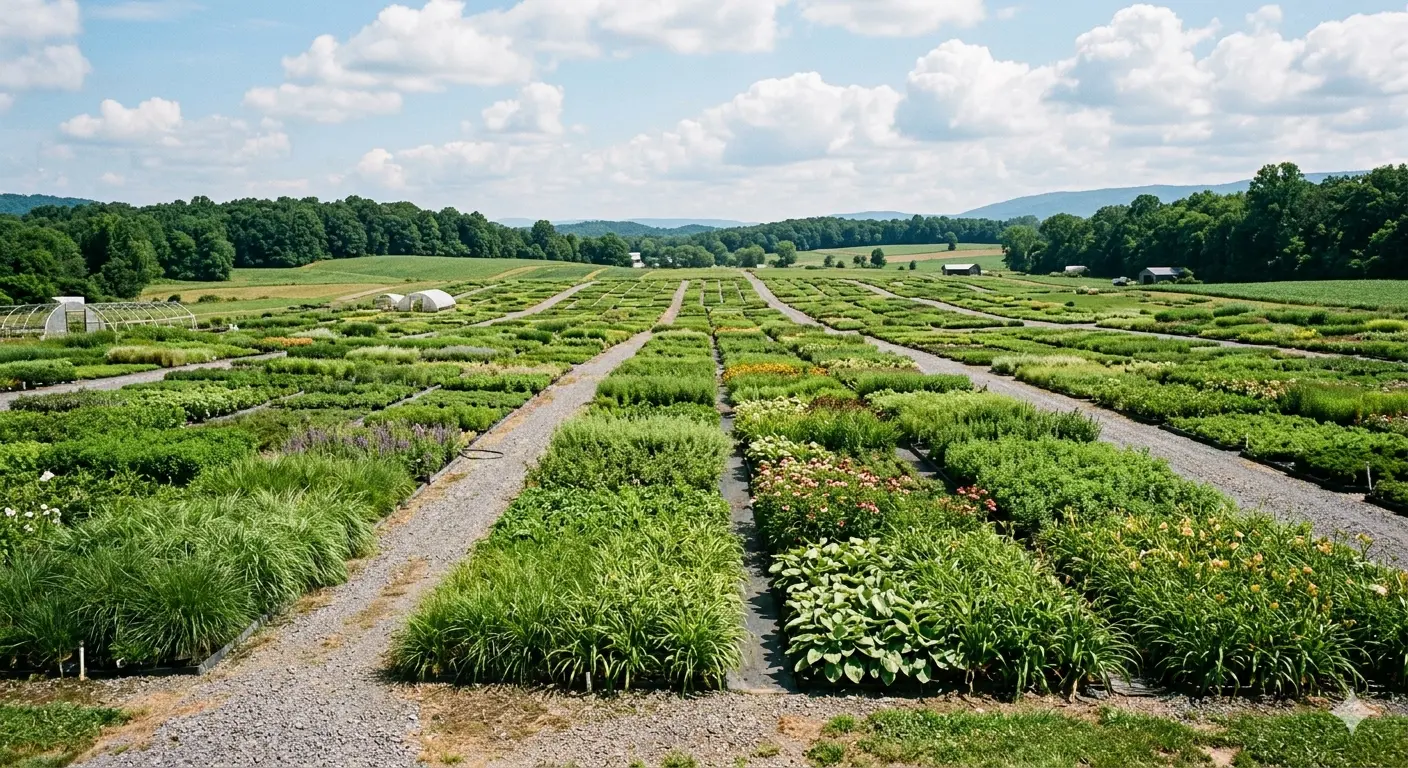
Most nurseries are something you walk through. Sandy’s Plants in Mechanicsville, Virginia, is something you drive through. With roughly 30 acres of perennial beds in numbered sections, customers grab a golf cart, mark their map, and set off across the property. Reviewers consistently describe the trip as worth the drive.
I have not been to Sandy’s Plants in person, so what follows is researched from current Google reviews and the patterns across the reviews. The goal is to help you decide whether the trip is worth it for what you need, and to plan for the kind of visit Sandy’s actually rewards.
Quick answer
Sandy’s Plants is a 30-acre destination perennial nursery in Mechanicsville, Virginia, north of Richmond. It is best known for hostas (including cultivars like Stained Glass), hibiscus, ferns, and a deep perennial selection. The experience is genuinely unusual, you ride a golf cart with a plant locator map. Pricing is on the higher side, especially for casual shoppers, but the selection and quality are what bring people back.
What Sandy’s Plants actually is
The simplest way to describe it: most nurseries are stores, Sandy’s is a working perennial farm that sells to the public. The scale is the first thing that sets expectations.
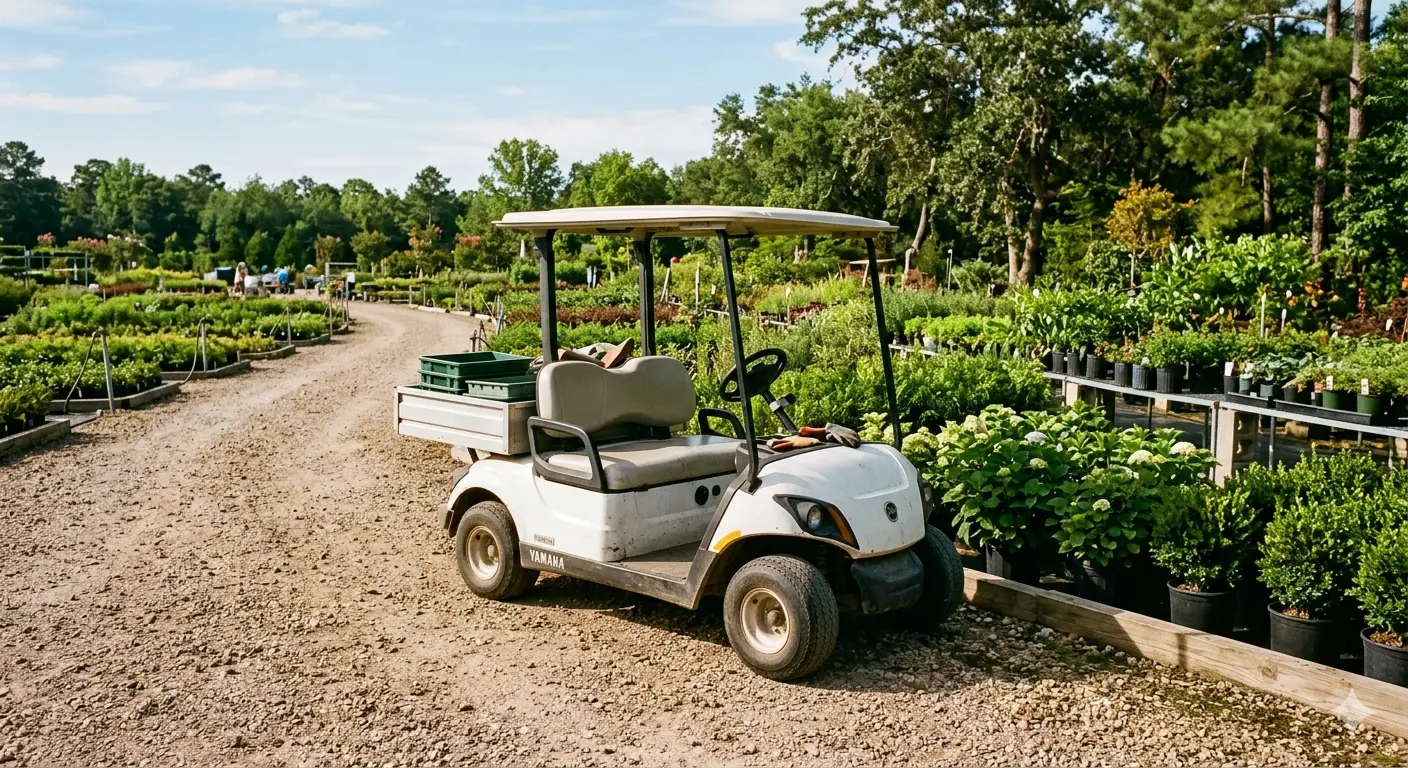
Thirty acres is large enough that walking it is impractical. Reviewers describe arriving, getting directed to the cart area, picking up a plant locator map, and choosing a golf cart. From there, you drive the gravel paths to whatever beds match the plants on your list.
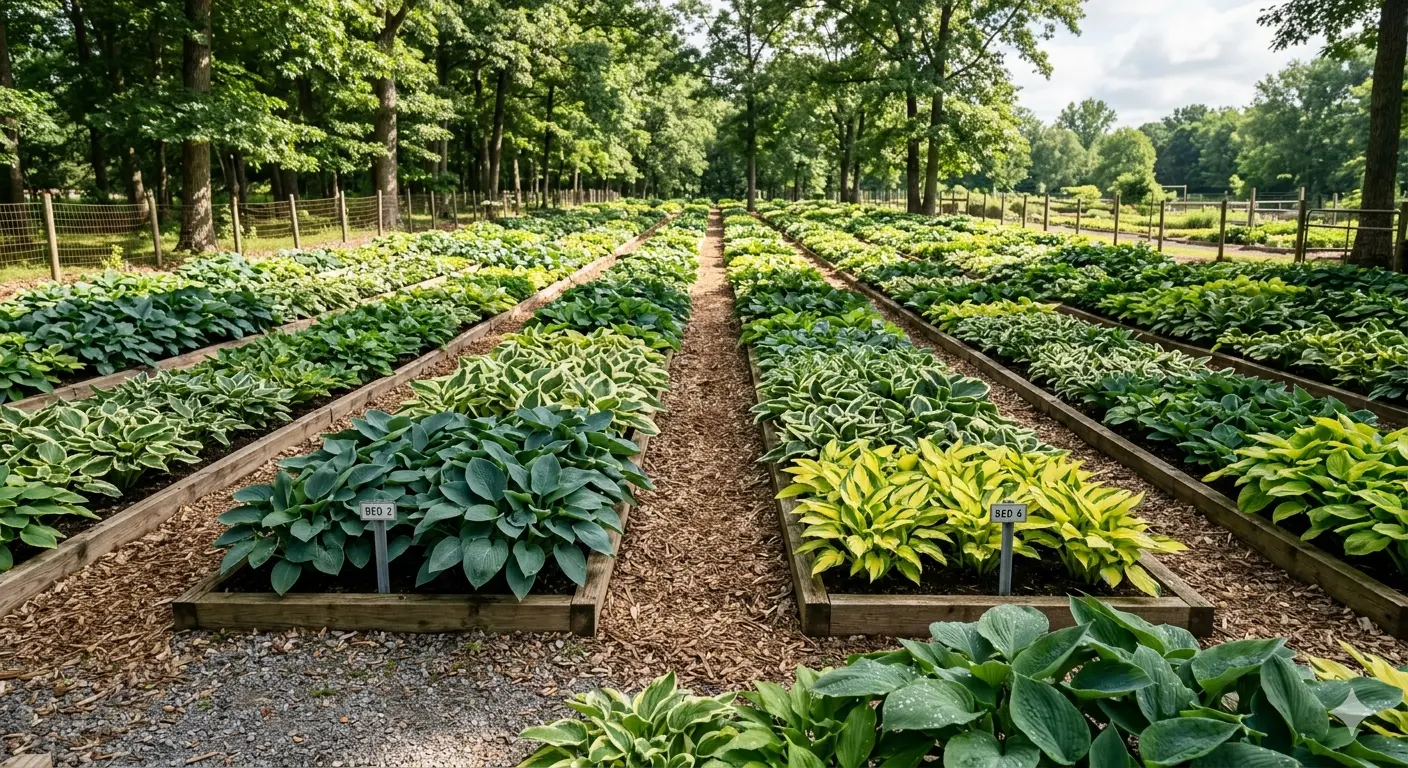
The map shows bed numbers, plant names (scientific), quantities, and prices. The plants themselves are mostly outdoors in their growing beds rather than potted up on display tables, which keeps the experience closer to walking a real production farm than a styled garden center.
This is genuinely the right format for a serious perennial collection. With this many beds, a traditional nursery layout would either be impossibly cramped or impossibly disorganized. The map-and-cart system lets you treat the trip like a research project, which is what most of the customers actually want.
What Sandy’s Plants specializes in
The core specialty is perennials, and within that, several categories show up repeatedly in reviews.
Hostas are mentioned often. One reviewer specifically drove to Sandy’s looking for the Stained Glass hosta cultivar and found it. For collectors of variegated, blue-leaved, or unusual hosta varieties, this is a destination-level source.
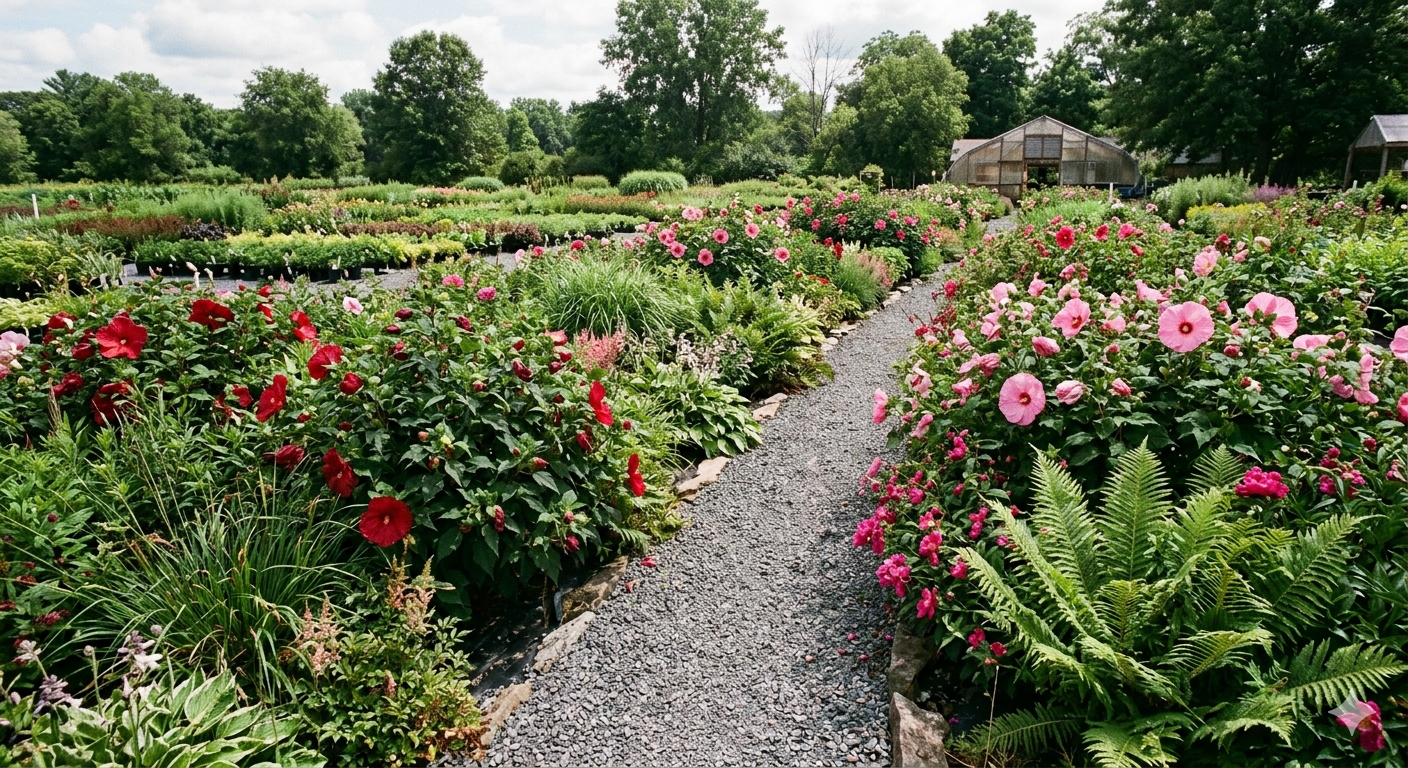
Hibiscus is mentioned in multiple reviews as a category worth exploring. Hardy perennial hibiscus in particular are not always easy to find in volume or in unusual cultivars, and Sandy’s appears to be a serious source.
Ferns show up in several reviews, with one customer noting they brought home a few new fern varieties they had not seen before. For shaded-yard gardeners, this is significant. Fern selection at regular nurseries tends to be the same handful of varieties everywhere.
General perennials make up the rest of the depth. The reviews suggest the catalogue runs well beyond the usual nursery selection. The website inventory listing (with scientific names) is what most experienced reviewers recommend checking before a visit, because the on-site browsing approach without preparation is overwhelming.
What customers consistently say
Three themes come up across nearly every Sandy’s Plants review.
The experience itself is the draw. Customers describe Sandy’s as a great day out, an adventure, and a destination, not a quick errand. The golf cart, the map, the scale, and the production-farm feel combine into something genuinely different from a regular nursery trip. Multiple reviewers come back specifically for the experience as much as for the plants.
Staff is consistently warm and helpful. This is not a small detail. Office staff get repeated praise, and Ms. Sandy herself, the founder, is named in at least one review for making a customer’s visit memorable. For a 30-acre operation, that named-owner-on-site signal is rare and worth noting.
The plant quality and selection genuinely justify the trip. Reviewers consistently describe leaving with more than they planned to buy, finding cultivars they could not source elsewhere, and being impressed by plant health. Healthy plants from a serious specialty source are not a given anywhere, and Sandy’s earns this praise across years of reviews.
Where the experience has limits, honestly
A few things to know before you drive out.
Pricing is on the higher side. Multiple reviewers note this directly. A casual shopper looking for a few impulse perennials may find better prices at a big-box garden center or smaller local nursery. The reason Sandy’s prices what it does is the selection depth and the quality, you pay for the cultivar you cannot find elsewhere. If price is your primary filter, this is not the right destination.
Business accounts get better pricing. This came up in at least one review and matches what the operation looks like overall, a place built to serve landscape professionals and serious gardeners. If you run a landscape business, the value math is different than for casual visitors.
Going in unprepared is overwhelming. This is the most repeated practical warning across reviews. With 30 acres of beds and limited signage between them, customers who arrive without a list and bed numbers describe spending more time lost than buying. Reviewers strongly recommend using the website inventory first.
Limited hours, no Sundays. Standard nursery business hours, but the Saturday close at 2 PM and the no-Sunday policy catch out-of-town visitors who assume a destination nursery would have longer weekend hours. Plan your trip around the actual window.
Is Sandy’s Plants worth the trip?
For most Virginia gardeners who are serious about perennials, yes.
If you are looking for specific hosta, hibiscus, fern, or perennial cultivars that you have struggled to source elsewhere, this is one of the better destinations in the mid-Atlantic. If you have a landscape project that calls for unusual perennials in volume, the business-account pricing makes the trip even more worthwhile.
If you are looking for a fun, distinctive plant-shopping experience, the golf cart and map and 30 acres genuinely deliver. Reviews are full of customers who came for the day and stayed.
If you are looking for impulse perennials at the lowest price, this is not the right trip. The pricing is meant for what they sell, and you can find generic perennials cheaper at a big-box garden center down the road.
How to make the most of a Sandy’s visit
Practical tips drawn directly from the patterns in reviews.
Use the website inventory first. Before you drive, look up your wishlist on Sandy’s website. Note the scientific names (their inventory lists them this way), and note bed numbers if available. This single step changes the trip from chaotic to efficient.
Go on a weekday if you can. Saturday is the only weekend day they are open, and it gets busy. Weekday mornings give you a quieter cart route and more time with staff if you have questions.
Bring a friend who shares the hobby. Reviewers describe Sandy’s as a place to spend hours, not minutes. A serious gardener will treat it as a destination day, not a quick stop. Plan to have lunch in Mechanicsville or Richmond on the way back.
Plan how you will transport plants. This is a real perennial nursery, not a houseplant boutique. If you are buying meaningful quantities, bring a vehicle with cargo space.
Confirm before driving
Specific plant availability and pricing can shift week to week, especially for popular cultivars. Worth calling 804-746-7092 before driving out from Richmond or further, particularly if you have your heart set on a specific hosta or hibiscus variety. Reviews reflect a snapshot in time and current inventory may differ.
Final thoughts
Sandy’s Plants is what a serious perennial nursery looks like at scale without losing its identity. The golf cart and map are not gimmicks. They are the practical way to run a 30-acre nursery that sells to the public. The owner is on site, the selection is genuine, the pricing matches what is sold.
If you visit, I would love to hear what you found. Tell me in the comments which beds you spent the most time in, which plants you brought home, and whether the experience matched the reputation. Real reader experiences are the best update for a profile like this.
Frequently Asked Questions
Where is Sandy’s Plants located?
Sandy’s Plants is at 8011 Bell Creek Road in Mechanicsville, Virginia, just north of Richmond. The property spans roughly 30 acres, much larger than a typical nursery, so plan extra time for your visit.
What makes Sandy’s Plants different from other nurseries?
Two things. First, the scale, 30 acres of perennials in numbered beds with a plant locator map. Second, you do not walk it, you take a golf cart. Customers pull up, grab a cart, mark their map, and drive bed to bed. It is closer to a plant-hunting safari than a garden center.
What does Sandy’s Plants specialize in?
Perennials are the core. Reviews consistently mention hostas (including hard-to-find cultivars like Stained Glass), hibiscus, ferns, and a deep selection of garden perennials that would be difficult to find at a regular nursery. They list inventory on their website with scientific names, which is useful before you visit.
What are Sandy’s Plants’ hours?
Monday through Friday 8 AM to 4:30 PM, Saturday 8 AM to 2 PM, and closed Sunday. The earlier close on Saturday catches first-time visitors, so plan your trip with the time you need to actually explore the property.
Are Sandy’s Plants prices high?
Reviews describe pricing as on the higher side compared to big-box retailers, which fits the deeper selection and the perennial-specialty focus. Several reviewers mention that business accounts get better pricing, which suggests the operation leans toward landscape professionals and serious gardeners over casual shoppers. The plant quality justifies the prices for most reviewers.
Do I need to research before visiting Sandy’s Plants?
Yes, and this is a strong recommendation from multiple reviewers. Use their website inventory before you drive out, note the scientific names of plants you want, and use the bed numbers on arrival. With 30 acres of beds, going in cold is overwhelming. Going in with a list turns it into a great experience.
