


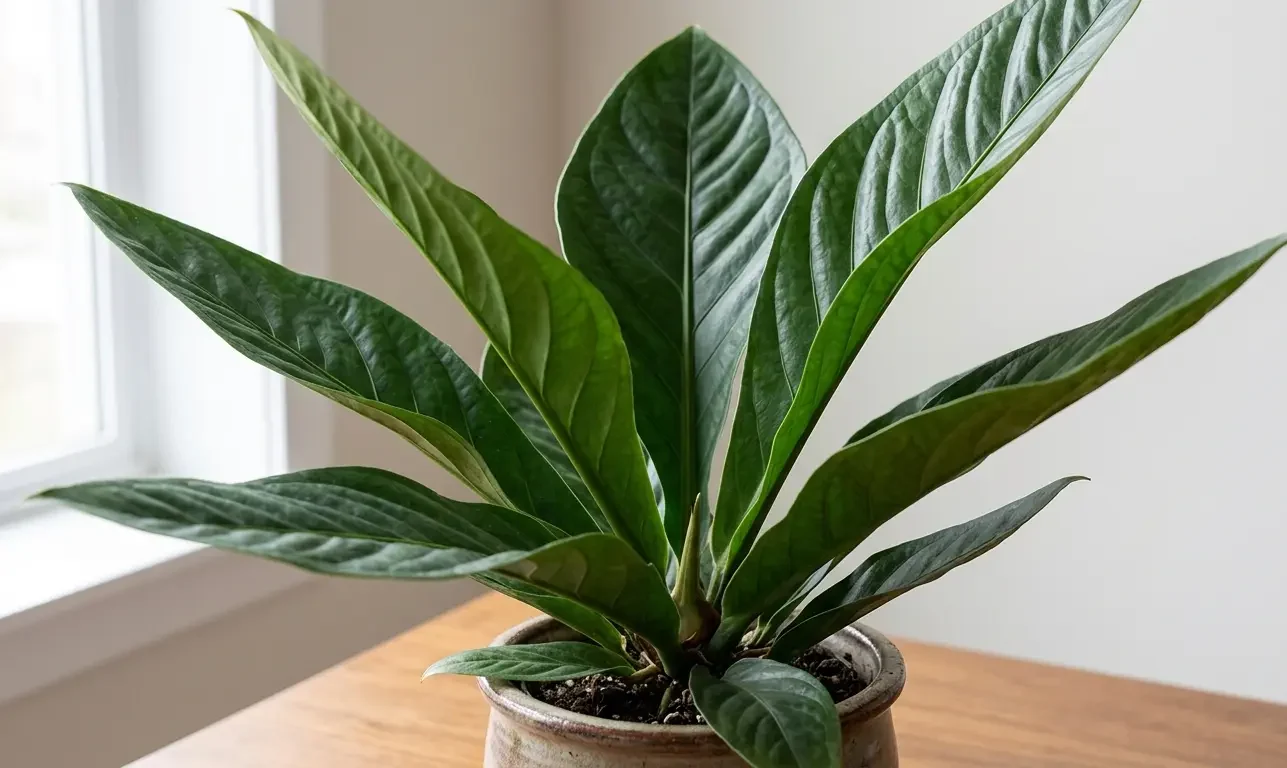
If you love the look of an anthurium but want one that will forgive you, meet Anthurium superbum. This is the Bird’s Nest Anthurium, a tough, sculptural species that grows in a tight upright rosette of thick, ribbed, leathery leaves with striking purple undersides.
It has a prehistoric, almost reptilian presence, and it is one of the easiest anthuriums you can grow, far more forgiving than the fussy velvet types. This guide covers everything you need to keep one thriving.
Quick care summary
Anthurium superbum wants bright indirect light (no direct sun), warmth of 60 to 85°F, and does fine in average to high humidity. Water when the top one to two inches of soil dry, in a chunky, well-draining mix, and never let it sit soggy. It is one of the toughest, most forgiving anthuriums.
This is a variety guide. For the full picture across the genus, see my Anthurium care guide and my roundup of the best Anthurium varieties.
What is Anthurium superbum?
Anthurium superbum is a bird’s-nest type anthurium native to the lowland tropical forests of Ecuador. Unlike the vining or velvet heart-leaf types, it grows in a tight, upright rosette, which is where the bird’s-nest name comes from.
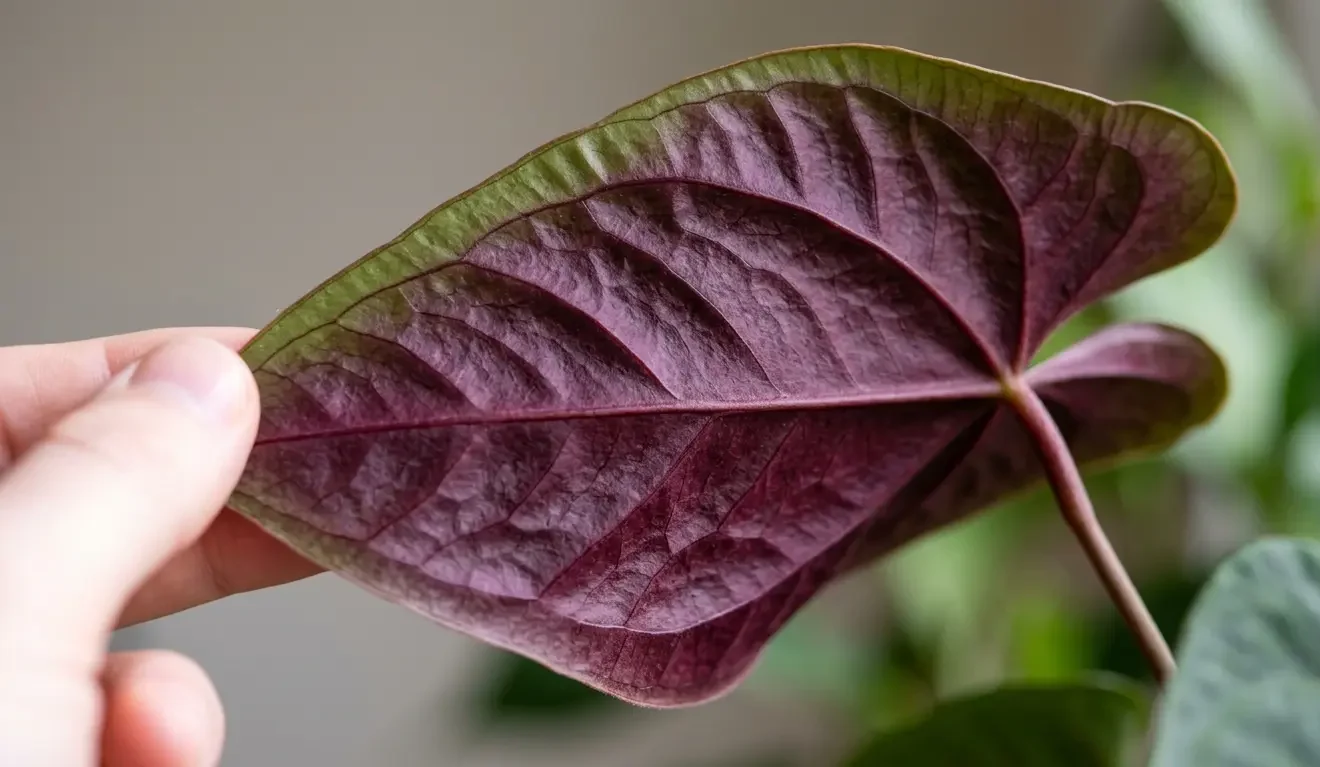
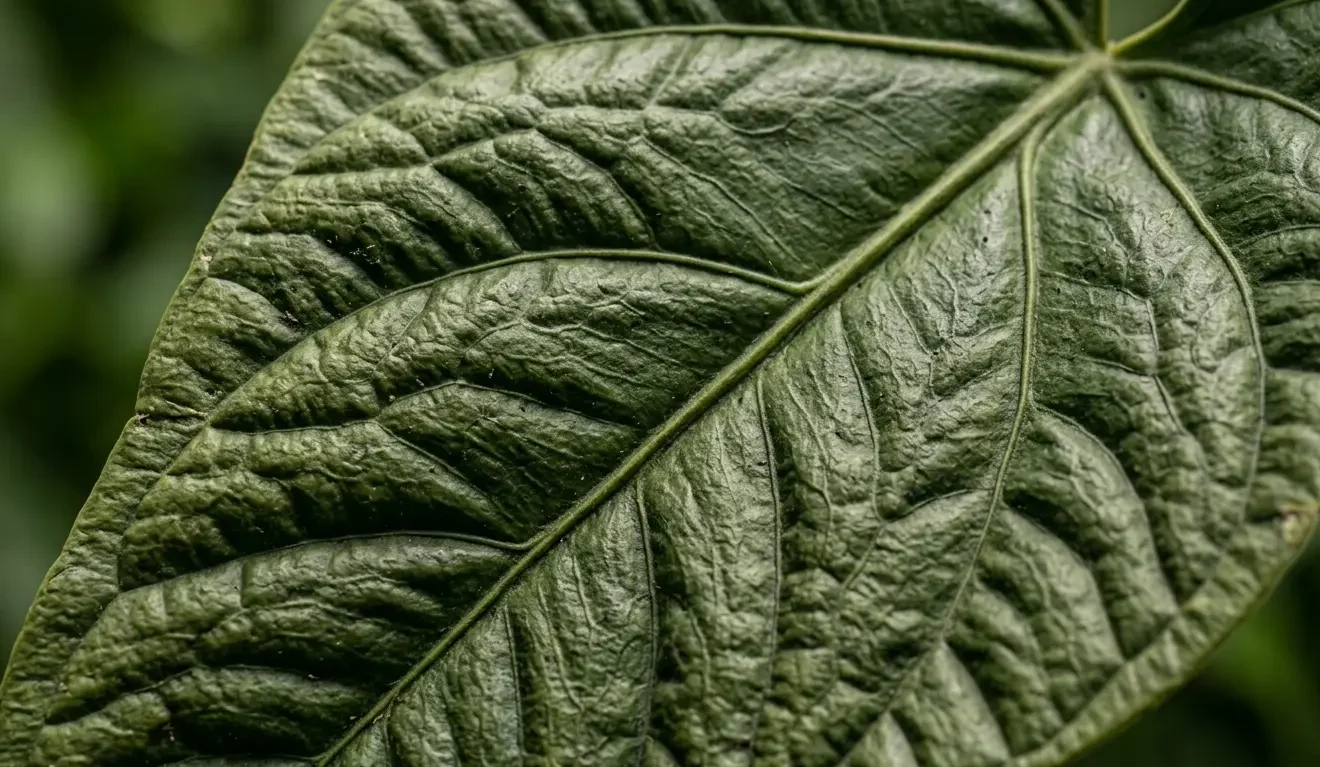
Its leaves are the star: thick, stiff, leathery, and ribbed or corrugated, in a deep olive-green, with a distinctive purple-to-burgundy underside. The overall look is rugged and prehistoric, more sculpture than delicate foliage.
In the wild it grows as an epiphyte, with its funnel-shaped rosette catching rainwater and falling debris to feed its thick, orchid-like roots. Mature plants range from compact to a few feet tall and wide.
Anthurium superbum quick-care table
| Need | What it wants |
|---|---|
| Light | Bright, indirect; no direct sun |
| Water | When top 1 to 2 inches dry; never soggy |
| Humidity | Tolerant; fine in average home humidity |
| Temperature | Warm, 60 to 85°F (15 to 29°C) |
| Soil | Chunky, airy, well-draining mix |
| Difficulty | Easy; one of the toughest anthuriums |
| Toxicity | Toxic to pets and people |
Light
Anthurium superbum thrives in bright, indirect light. Thanks to its thick, dark leaves, it copes with slightly lower light than the velvet anthuriums, but it looks and grows best in bright, filtered light.
Keep it out of direct sun. As a forest-floor plant, harsh direct light bleaches the prized purple undersides and causes crispy yellow patches on the leaves. A spot near a bright window with filtered light is ideal.
It will tolerate moderately lower light better than most anthuriums, but expect slower growth there. For the fullest rosette and richest color, give it good bright indirect light.
Watering
Water when the top one to two inches of soil feel dry. In warm months this may be every four to five days; in winter, weekly or less as growth slows. Always check the soil rather than watering on a fixed schedule.
This is where superbum shines as a forgiving plant. Its thick, orchid-like roots and moisture-holding leaves let it tolerate mild drought, so it will not collapse if you are a day or two late.
The real risk, as with all anthuriums, is overwatering. Never let it sit in soggy soil or standing water, which causes root rot, so let that top layer dry and use a pot with drainage.

Soil
Because superbum is an epiphyte with thick, air-loving roots, it wants a chunky, loose, fast-draining mix rather than dense potting soil. Good drainage is the best protection against root rot.
An orchid or aroid mix works perfectly: orchid bark and perlite for structure, with some charcoal, coco coir, or a little potting mix to hold light moisture. The goal is a mix that drains freely but stays barely moist.
Always use a pot with drainage holes. The funnel-shaped rosette also appreciates a stable, slightly weighty pot, as a large superbum can get top-heavy.
Humidity
Here is what sets superbum apart: it is unusually relaxed about humidity for an anthurium. Its thick, leathery leaves resist water loss, so it does fine in average home humidity, often quoted around 40 to 50 percent, where velvet anthuriums would struggle.
That said, it still does best with good humidity, and a humidifier or a spot near other plants will keep it at its lushest. A bright bathroom or kitchen suits it well if you want to pamper it.
The tell-tale sign that the air is too dry is new leaves emerging stunted or deformed from the center of the nest. If that happens, raise the humidity, ideally with a humidifier and good airflow rather than soaking the leaves.
Temperature and feeding
Keep superbum warm, ideally 60 to 85°F (15 to 29°C), and avoid anything below 55°F, which stunts growth. Protect it from cold drafts, AC vents, and heating vents, and aim for a steady temperature year-round.
Feed lightly during the growing season. A balanced fertilizer, such as a diluted 20-20-20, every few weeks to monthly is plenty, tapering off in fall and winter. It is not a heavy feeder, so go easy to avoid burning the roots.
Growth, pruning, and cleaning
Superbum grows slowly and stays relatively manageable, though over time it forms a bold rosette that can reach a few feet across. Give it room to spread.
Pruning is minimal. As the plant grows, it pulls energy from the oldest outer leaves, which yellow and can simply be removed at the base once spent. Because the leaves are the whole show, wipe them occasionally with a damp cloth to keep them clean, glossy, and able to photosynthesize.
A handling note: like all anthuriums, the sap contains irritating calcium oxalate, so it is wise to wear gloves when pruning or repotting.
Anthurium superbum vs hookeri
Both are bird’s-nest anthuriums and often confused, so here is the quick tell.
Superbum has thicker, stiffer, more corrugated leaves with distinctive purple-to-burgundy undersides and a more upright, prehistoric look. Hookeri tends to have broader, flatter, glossier green leaves. If the leaves are rugged, ribbed, and purple beneath, you are looking at superbum.
Common problems
Superbum is hardy, but a few issues come up, almost all from watering or light.
Yellowing of the oldest outer leaves is usually normal aging, just remove them. Widespread yellowing or mushy stems means overwatering and root rot, so check the roots and let the soil dry more. Crispy yellow or bleached patches usually mean too much direct sun, so move it to filtered light.
Like other anthuriums, it can occasionally attract spider mites, mealybugs, or scale, though its overlapping leaves help shield it. Check the leaves now and then and treat early with insecticidal soap or neem oil if needed.
Is Anthurium superbum worth it?
Absolutely, especially if you want a striking anthurium without the demanding care. It delivers bold, sculptural, prehistoric foliage and shrugs off the average home conditions that defeat the velvet types, making it one of the best anthuriums for beginners.
Just give it bright indirect light, water it carefully, and remember it is toxic to pets and people if chewed, so place it out of reach.
Do you grow Anthurium superbum, or are you considering one for a bold, low-fuss statement? Tell me in the comments, and see my Anthurium care guide for the genus-wide basics.
Frequently asked questions
Is Anthurium superbum easy to care for?
Yes, it is one of the easiest and toughest anthuriums. Its thick, leathery leaves and orchid-like roots make it forgiving of occasional missed waterings and average home humidity, unlike the fussy velvet types. Give it bright indirect light, a chunky well-draining mix, and warmth, and it is very low-maintenance.
Does Anthurium superbum need high humidity?
It likes humidity but tolerates average home humidity well, which is unusual for an anthurium. Its thick leaves resist water loss, so it does fine around 40 to 50 percent, though it grows best with higher humidity. If new leaves emerge stunted or deformed, the air is too dry.
How is Anthurium superbum different from hookeri?
Both are bird’s-nest anthuriums, but superbum has thicker, stiffer, more corrugated leaves with distinctive purple-to-burgundy undersides and a more upright, prehistoric look. Hookeri tends to have broader, flatter, glossier green leaves. Superbum is the more sculptural, rugged of the two.
Why are the leaves on my Anthurium superbum turning yellow?
A little yellowing of the oldest outer leaves is normal as the plant redirects energy to new growth, just remove them at the base. Widespread yellowing usually means overwatering and the start of root rot, so check the roots and let the soil dry more.
How often should I water Anthurium superbum?
Water when the top one to two inches of soil are dry, often about every four to five days in warm months and weekly or less in winter. Its thick roots tolerate mild drought, so it forgives the odd late watering, but never let it sit soggy.
Is Anthurium superbum toxic to pets?
Yes. Like all anthuriums, it contains calcium oxalate crystals and is toxic to cats, dogs, and people if chewed. The sap can also irritate skin, so it is worth wearing gloves when handling or pruning it.
